Productivity Tips for Entrepreneurs (Starting With a $1 Trillion Decision)
productivity tips entrepreneurs featured

In 1994, a thirty year old named Jeff Bezos had a good, secure job at a Wall Street investment firm. He’d noticed internet usage was growing at an almost unbelievable rate and had an idea, an online bookstore, but leaving a stable career for it felt like an enormous risk. His boss at the time, David Shaw, told him to think it over carefully before doing anything.

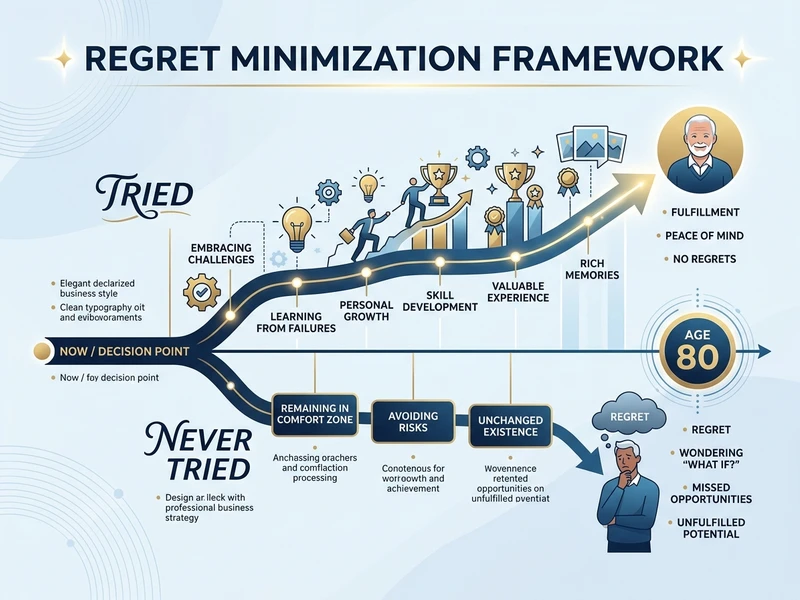
Bezos needed a way to actually decide, so he built himself a simple mental framework. “I wanted to project myself forward to age eighty,” he later explained, “and say, okay, now I’m looking back on my life. I want to have minimized the number of regrets I have.” He realized that if Amazon failed, the sting would eventually fade. But if he never tried at all, that regret would follow him permanently. He called it, in his own words, “which only a nerd would call,” a regret minimization framework. It made an agonizing decision, in his words, incredibly easy.

That single decision framework is a more useful productivity lesson for entrepreneurs than most tactical advice about calendars and to do lists. Entrepreneurship isn’t usually short on tasks, it’s short on clarity about which decisions and efforts actually matter. Here’s how to build real productivity around that, starting with how you decide, not just how you schedule.

Make Big Decisions With a Framework, Not Just Instinct

productivity tips entrepreneurs decision framework

Bezos’s method works because it turns an emotionally overwhelming decision into a specific, answerable question.

  • When facing a major decision, project yourself years into the future and ask which choice you’d regret more, acting or not acting
  • This reframes fear of failure, since a failed attempt is usually easier to live with than never having tried at all
  • Use this specifically for big, infrequent decisions, hiring a key person, pivoting the business, taking on investment, not everyday small choices
  • The goal isn’t certainty, it’s clarity, a framework that makes a hard decision feel answerable instead of paralyzing

Protect Time for the Decisions That Actually Matter

productivity tips entrepreneurs protect decision time

Most entrepreneurs spend far more time on small operational tasks than on the handful of decisions that shape the business’s direction.

  • Identify the two or three decisions this quarter that will matter most in a year, and give them real, undistracted thinking time
  • Don’t let daily operational fires consume the time that should go toward those bigger calls
  • Schedule specific blocks for strategic thinking the same way you’d schedule a client meeting, not as an afterthought
  • Revisit those key decisions regularly rather than making them once and never checking whether they still hold up

Delegate the Decisions That Don’t Need You
productivity tips entrepreneurs delegate decisions

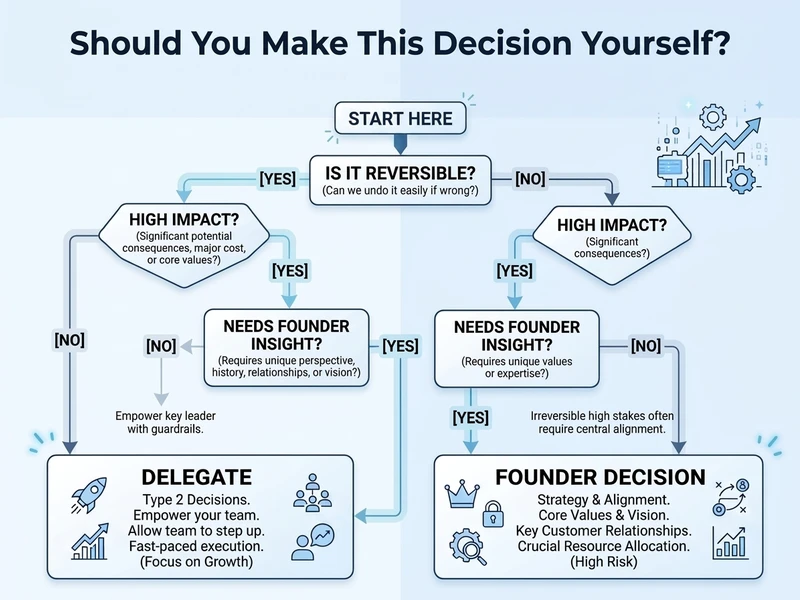
Not every choice in a growing business requires the founder’s direct involvement, and knowing which ones don’t is its own productivity skill.

  • Separate decisions that are genuinely reversible from ones that aren’t, and hand off the reversible ones to your team
  • Build simple decision making guidelines so your team can act without escalating every small choice back to you
  • Notice when you’re being consulted purely out of habit rather than necessity, and actively redirect those decisions elsewhere
  • Reserve your own attention for the decisions that are both significant and hard to undo

Build in Regular Reflection, Not Just Constant Forward Motion

productivity tips entrepreneurs regular reflection

Bezos didn’t use his framework once and move on, he’s referenced returning to the same mental model for major decisions throughout his career.

  • Set a regular cadence, monthly or quarterly, to step back and assess whether your current direction still makes sense
  • Ask honestly whether you’re avoiding a decision out of fear of a bad outcome rather than genuine uncertainty about the right path
  • Keep a running note of major decisions and their outcomes, so you can actually learn from your own pattern over time
  • Treat reflection as part of running the business, not a luxury you’ll get to once things calm down

Accept That Some Regret Is Unavoidable, and Choose Wisely

productivity tips entrepreneurs accept the regret

The regret minimization framework isn’t about avoiding all discomfort, it’s about choosing which kind of regret you’re more willing to live with.

  • Every meaningful business decision involves some form of trade off, there’s rarely a version with zero risk of regret
  • Ask which regret would be harder to live with long term, not which choice feels safest today
  • Small, short term discomfort is often a reasonable price for avoiding a much larger long term regret
  • This applies beyond the big founding decision, use it for smaller pivotal moments too, a hire, a partnership, a pricing change
  • Use the 10/10/10 Rule Before Major Business Decisions

    When you’re stuck between two difficult options, ask yourself:
    How will I feel about this decision in 10 minutes?
    How will I feel in 10 months?
    How will I feel in 10 years?
    This simple framework, popularized by business writer Suzy Welch, helps separate short-term emotions from long-term consequences. Entrepreneurs often avoid uncomfortable decisions because they focus on immediate stress instead of lasting impact. Looking across different time horizons makes it easier to choose what truly matters.

FAQ: Productivity Tips for Entrepreneurs

It’s a decision making method where you imagine yourself at age eighty looking back on a major decision, and ask which outcome, acting or not acting, you’d regret more. Bezos used it to decide whether to leave a secure job and start Amazon.

Most entrepreneurs don’t struggle from a lack of effort, they struggle from unclear priorities among too many demands. Improving how you make and protect time for major decisions tends to matter more than simply working longer hours.

Decisions that are easily reversible and don’t require unique founder insight are usually safe to delegate. Decisions that are significant and hard to undo deserve your direct attention and real thinking time.

A monthly or quarterly check-in works well for most growing businesses, enough to catch a direction that’s stopped making sense without constantly second guessing every past decision.

Jeff Bezos didn’t build a trillion dollar company by managing his calendar more efficiently. He built it starting from one clear, honest question about regret, asked at a moment when the easy path and the right path weren’t the same thing. Real productivity for an entrepreneur usually starts there too, not in doing more, but in getting clear on which decisions actually deserve your full attention.


Similar Posts

Leave a Reply

Your email address will not be published. Required fields are marked *