Productivity System for Beginners (Starting With a Notebook and ADHD)
Ryder Carroll spent much of his childhood being told, directly or indirectly, that something was wrong with how his mind worked. Diagnosed with ADHD before it was widely understood or accommodated, he struggled with distraction, procrastination, and the kind of overwhelm that made ordinary tasks feel unmanageable. “The main culprit was my inability to rein in my focus,” he later wrote. “It wasn’t that I couldn’t focus, I just had a hard time concentrating on the right thing at the right time, on being present.”
Every productivity system he tried growing up either felt too rigid or simply didn’t match how his mind actually worked. So over the course of roughly fifteen years, using nothing more than pen and paper, he kept adjusting, testing, and rebuilding his own approach. In his own words, “I created Bullet Journal, because I needed it.” What eventually emerged became the Bullet Journal method, now used by millions of people worldwide, most of whom don’t have ADHD at all, but recognize the same basic problem, existing systems that don’t actually fit how a real, imperfect, easily distracted mind works.
That’s the honest starting point for anyone looking for a productivity system as a beginner. The goal isn’t finding the system everyone else swears by. It’s finding, or building, one simple enough to actually follow on your worst days, not just your best ones.
Why Most Productivity Systems Fail Beginners
Carroll’s own experience points to a problem most productivity advice doesn’t address directly.
Start With Three Simple Lists

Carroll’s original method is built around a small number of very simple components, which makes it a genuinely good starting point for beginners.
Use Simple Symbols Instead of Complicated Formatting

Part of what makes this approach sustainable is how little effort it takes to maintain.
Review and Migrate Regularly

This is the step Carroll considers essential, and it’s also the one beginners are most likely to skip.
Build the Habit Before Worrying About Making It Pretty

A common trap for beginners, especially with a visual system like this, is spending more effort on decoration than function.
Adjust the System Until It Actually Fits You
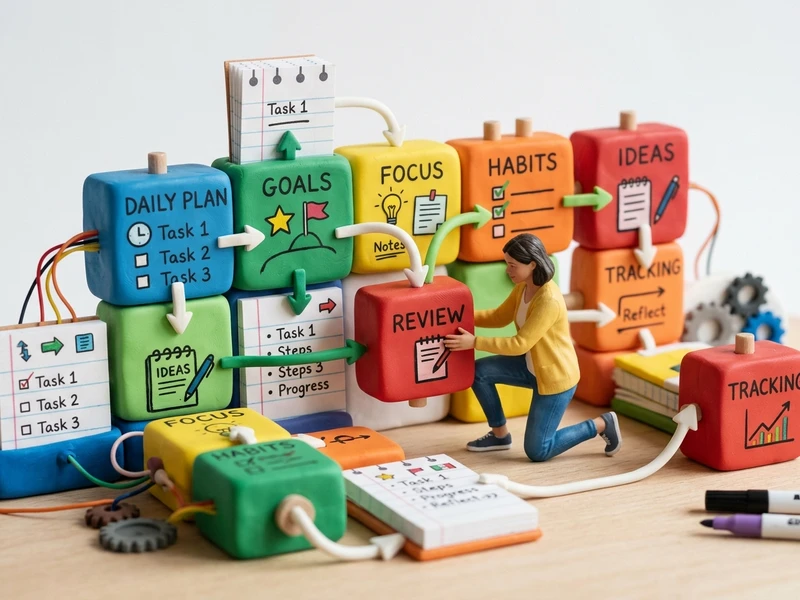
Carroll has been explicit that his method isn’t meant to be followed rigidly, and that flexibility is part of the design.
FAQ: Productivity System for Beginners
Ryder Carroll didn’t find the right system by picking the most popular one available. He built it slowly, out of real necessity, adjusting it for fifteen years until it actually worked for how his mind functioned. That’s a more realistic starting point for any beginner than searching for the one perfect system everyone else swears by. Start simple, adjust often, and let the system prove itself through consistent use, not through how complete it looks on day one.