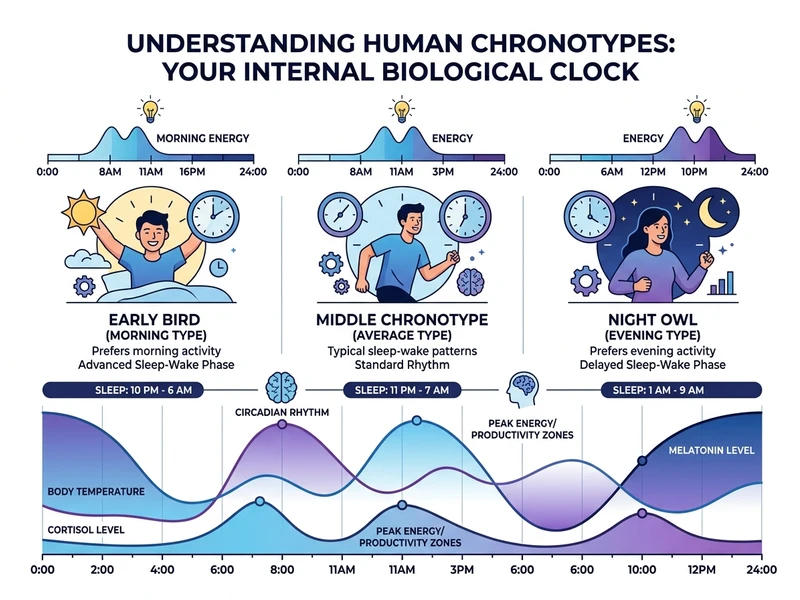
Chronobiologist Till Roenneberg has spent decades studying something most workplaces still ignore, chronotype, your biological tendency to feel naturally alert earlier or later in the day. His research found that despite most people falling somewhere in the middle or leaning later, work and school schedules are still built almost entirely around early risers. He calls the mismatch between your body clock and the clock society runs on “social jet lag,” and has gone as far as calling the disadvantage night owls face something close to biological discrimination.
None of this means night owls are less disciplined or less capable. It means most productivity advice, written by and for early risers, simply doesn’t fit how a night owl’s brain actually works. Here’s what does.
Why Standard Productivity Advice Fails Night Owls
Most productivity content assumes an early chronotype without ever saying so directly.
Advice built around 5 a.m. wake ups and morning deep work sessions assumes a biological alertness pattern night owls simply don’t have
Roenneberg’s research shows work and school schedules are built for early types, even though a large share of the population leans later
Forcing a night owl into an early schedule doesn’t build discipline, it creates what researchers call social jet lag, a chronic mismatch between body clock and social clock
The fix isn’t trying harder to become a morning person, it’s designing a routine around when your own energy actually peaks
Identify Your Real Peak Hours
Before optimizing anything, get honest about when your energy and focus are genuinely highest.
Track your natural energy for a week without forcing an early schedule, noting when focus and alertness genuinely peak
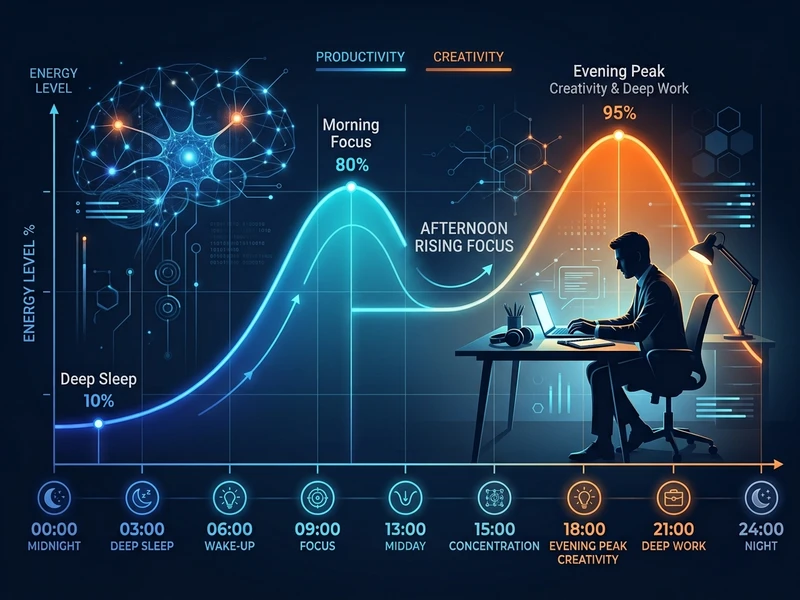
For most night owls, this tends to land in late morning through evening, not first thing after waking
Protect this window fiercely for your hardest, most demanding work, rather than burning it on something low value
Expect a slower, foggier stretch earlier in the day, and plan lighter tasks for that time instead of fighting it
Front-Load Low-Stakes Tasks Into Your Slow Hours
Instead of forcing deep focus early, use your low energy window for tasks that don’t need it.
Save routine tasks, email, small admin, tidying your workspace, for the hours you’re naturally foggier
Avoid scheduling your most important or creative work in that early window if you have any control over your schedule
If mornings are unavoidable for work or school, keep the first hour as light as possible on purpose
Save real decision making and hard problem solving for later in the day, when your focus is actually available
Protect Your Evening Focus Window Like Anyone Else Protects Their Morning
If your best hours land later in the day, treat them with the same respect morning routines get.
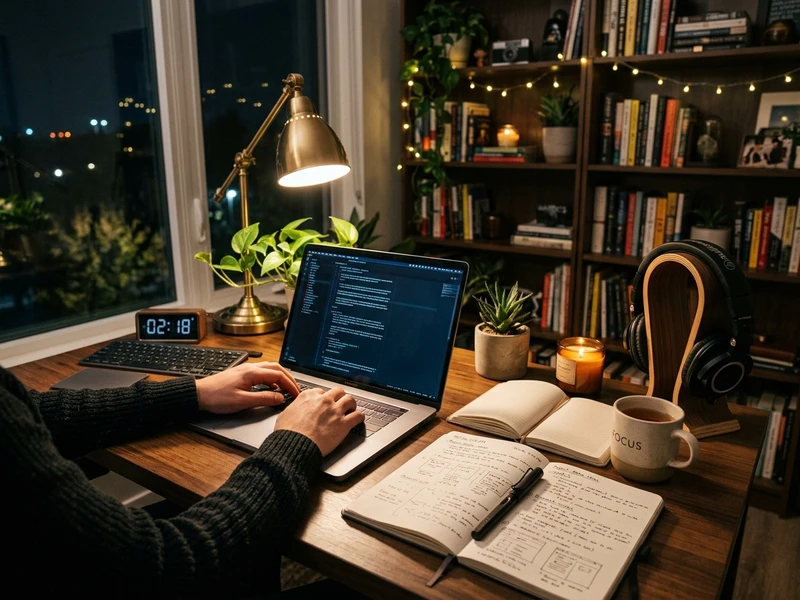
Block your peak hours on your calendar the same way you’d protect an early morning routine
Turn off nonessential notifications during this window so it doesn’t get quietly eaten by small interruptions
Communicate your peak hours to coworkers or family where possible, so people know when you’re actually reachable versus focused
Treat this window as your actual workday, not a bonus round after a day of forced early effort
Manage the Social Jet Lag You Can’t Fully Avoid
Most night owls can’t escape early obligations entirely, so a few adjustments help reduce the damage.
Keep a consistent sleep and wake time even on days off, since large swings make the mismatch worse, not better
Get bright light exposure as early as possible on forced early mornings, since light is one of the few things that can gradually shift your internal clock
Avoid caffeine late enough that it pushes your bedtime even later than your body already wants
Accept that some mismatch is likely unavoidable if your schedule is fixed, and focus your energy on the parts you can actually control
Stop Treating Your Chronotype as a Character Flaw
A lot of night owls carry real guilt about not being naturally productive early, and that guilt itself gets in the way.
Chronotype is substantially biological, not a discipline problem you’ve simply failed to fix
Comparing your mornings to an early riser’s mornings is comparing two different biological starting points
Research has found that people with a later chronotype often face real social stigma around their sleep patterns, on top of the practical scheduling mismatch itself
Redirecting energy from guilt toward actually protecting your real peak hours tends to be far more productive than trying to force an early routine that fights your biology
Are You Actually a Night Owl?
Your brain feels slow for the first few hours after waking Your best ideas appear in the evening You naturally stay awake later without forcing yourself You feel mentally sharper after sunset Sleeping early feels difficult even when you are tired Your energy rises as the day progresses
FAQ: Productivity Tips for Night Owls
Research from chronobiologists like Till Roenneberg indicates chronotype is substantially biological, shaped by your internal circadian clock rather than simply a habit or a lack of discipline.
To a limited degree, consistent light exposure and a stable sleep schedule can shift your internal clock somewhat, but most research suggests chronotype has a strong biological baseline that doesn’t change dramatically.
Trying to force their hardest work into early morning hours that don’t match their natural energy, then feeling like a failure for struggling with it, rather than restructuring their day around their real peak hours.
Some research has linked evening chronotypes to certain health risks, largely tied to the mismatch between their biology and typical work schedules, not to any inherent flaw in being a night owl. Much of the disadvantage appears to come from schedules built for early types, not from the chronotype itself.
Night owls aren’t failing at productivity, they’re operating on a body clock most schedules were never built for. Once you stop trying to force your best hours into the morning and start protecting them wherever they naturally fall, productivity tends to look a lot less like a struggle and a lot more like simply working with your own biology instead of against it.