
How to Start Journaling (What the Actual Research Recommends)

In the fall of 1983, psychologist James Pennebaker ran an experiment with a new graduate student, Sandy Beall, that he later described, in his own words, as “horribly underpowered.” He had a hunch, based on earlier research, that people who kept traumatic experiences secret tended to have more health problems than people who talked about them. His question was simple: if disclosing a secret to another person helped, would writing about it privately help too?
He asked college students to write continuously for fifteen minutes a day, four days in a row, about their most upsetting experiences. A control group wrote about trivial, unemotional topics for the same amount of time. The results, published in 1986 and expanded in the years since, found the group writing about real emotional experiences showed measurable improvements in physical health markers over the following months. The finding held up well enough to spawn what’s now called the Pennebaker Paradigm, and decades of follow-up research since.
It’s worth being precise about the size of this effect, since Pennebaker himself has been honest about it in his own later writing. Looking back on the research in 2018, he noted that across more than 100 studies, the overall effect size on health averages a modest .16, and the exact mechanism behind why it works is still debated among researchers. This isn’t a claim that journaling is a miracle cure. It’s a real, replicated, if modest, finding that writing honestly about what’s actually going on with you tends to help, and it’s a genuinely useful place to start if you’ve never kept a journal and don’t know where to begin.
Why Starting With Emotional Honesty Beats Starting With a Perfect System
Pennebaker’s original research points to something different than most “how to start journaling” advice assumes.
Start With a Short, Defined Time, Not an Open-Ended Goal
The structure of the original research offers a genuinely practical starting template.
Write About What Actually Matters to You, Not What You Think You Should Write About

The original research specifically asked participants to write about real, personally significant experiences, not a generic prompt.
Focus on Emotion and Meaning, Not Just Events
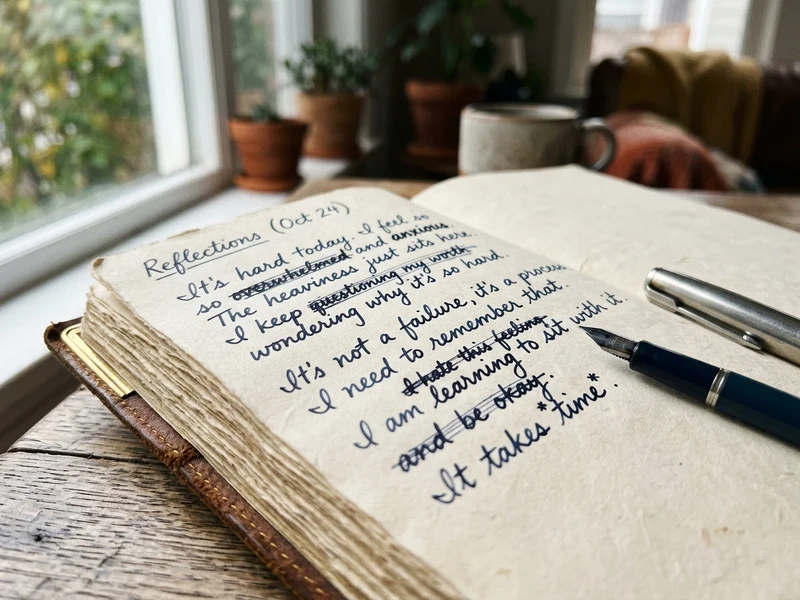
A detail often lost in casual summaries of this research is what the writing actually needs to include to be effective.
Expect the First Few Entries to Feel Uncomfortable

This is a real, documented pattern worth knowing about before you start, not a sign something’s going wrong.
Build From There, Once the Short Experiment Feels Manageable

The original research was designed as a short experiment, but many people build it into an ongoing habit from there.
FAQ: How to Start Journaling
James Pennebaker didn’t set out to create a wellness trend, he was testing a specific, modest hunch about honesty and health. What he found, replicated many times since, is a genuinely useful starting point for anyone unsure how to begin journaling. Skip the elaborate system. Set a short timer, write honestly about something that actually matters to you, and give it more than one try before deciding whether it’s for you.