
Journal Prompts for Career Clarity (Starting With a Calligraphy Class)
journal prompts career clarity featured

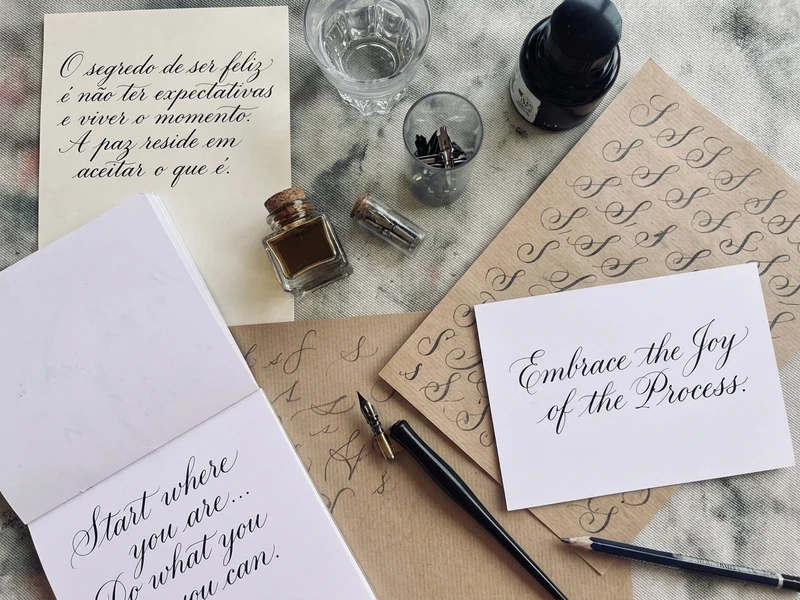
In 2005, Steve Jobs stood in front of Stanford’s graduating class and admitted something most successful people rarely say out loud. He had no idea what he was doing when he dropped out of Reed College and started wandering into classes that simply interested him, with no plan attached. One of them was calligraphy. He learned about serif and sans serif typefaces, about the space between letter combinations, purely because he found it beautiful. “None of this had even a hope of any practical application in my life,” he told the graduates.

Ten years later, designing the first Macintosh, he built beautiful typography directly into the machine, the first personal computer to have it. Windows later copied it. As Jobs put it, “it was impossible to connect the dots looking forward when I was in college, but it was very, very clear looking backwards ten years later.” His conclusion wasn’t a tidy productivity tip. It was an admission that career clarity rarely comes from a five year plan. It comes from trusting your actual interests in the moment, and only understanding why they mattered much later, looking back.

That’s a genuinely useful starting point for anyone journaling toward career clarity. Most people expect clarity to arrive as a clean answer. Jobs’s own story suggests it usually arrives as a pattern, visible only once you’ve lived enough of it to look back and connect the dots yourself. The prompts below are built to help you find that pattern now, rather than waiting a decade to see it in hindsight.

Why Career Clarity Rarely Comes From Planning Alone

Jobs’s own account pushes back on the idea that clarity requires a fixed destination decided in advance.

  • His calligraphy class had no career logic behind it at the time, he took it purely out of genuine interest
  • The connection to his later work only became visible in hindsight, not through forward planning
  • This suggests career clarity work benefits from examining what’s genuinely pulled your attention, not just what looks strategic on paper
  • Trusting an authentic interest, even one with no obvious application yet, is a real, defensible approach, not just a comforting idea

Prompts to Identify Your Own “Calligraphy Classes”

journal prompts career clarity calligraphy classes

Start by looking for the things you’ve been drawn to without a clear career reason, the way Jobs was drawn to typography.

  • What have I spent time learning or doing purely because it interested me, with no clear career payoff at the time
  • Is there a skill or interest I’ve quietly kept up with, even though it doesn’t obviously connect to my current path
  • What did I enjoy learning about before I ever thought about it in terms of a career
  • Looking back, is there a “dot” from years ago that quietly shaped where I am now, even though I didn’t see it coming
  • What am I curious about right now that I’ve been dismissing as impractical

Prompts to Examine Your Actual Work History Honestly

journal prompts career clarity examine work history

Career clarity often requires an honest look at patterns across your actual experience, not just your resume’s polished version.

  • What parts of my past roles did I genuinely enjoy, separate from the title or the paycheck
  • What tasks do I tend to volunteer for, even when they’re not required of me
  • When did I feel most capable and energized at work, and what was I actually doing in that moment
  • What feedback have I received repeatedly, and does it point to a strength I’ve been underusing
  • What parts of my work history would I genuinely want to repeat, given the choice

Prompts to Get Honest About What Isn’t Working

Clarity requires naming what’s not working just as much as identifying what is.

  • What about my current work drains me consistently, not just occasionally
  • Is there a gap between what I’m good at and what I actually enjoy doing
  • What decision about my career have I been avoiding making
  • If nothing changed for the next five years, how would I feel about that
  • What would I need to be honest with myself about to actually move forward

Prompts to Trust the Dots You Can’t Yet Connect

journal prompts career clarity trust the dots

Jobs’s core message wasn’t about certainty, it was about trusting a direction even without full clarity yet.

  • What’s a step I could take now, even without knowing exactly where it leads
  • What would I try if I trusted that it would eventually make sense, the way Jobs trusted his calligraphy class would
  • What’s holding me back from pursuing something interesting simply because I can’t yet see its practical use
  • Looking at my life so far, what unconnected dots am I only now starting to see a pattern in
  • What would “trusting the process” actually look like for me right now, practically, not just as a phrase

Prompts to Turn Reflection Into an Actual Next Step

journal prompts career clarity next step

Clarity without action tends to stay abstract, so it’s worth closing with something concrete.

  • Based on everything I’ve written, what’s one small, real step I could take this month
  • Who could I talk to who might help me understand this path more clearly
  • What information am I missing that would help me make a more confident decision
  • What would I regret not at least trying
  • What’s the version of my career I’d be proud to look back on in ten years
  • Career Clarity Is Usually Recognition, Not Revelation

    Many people expect career clarity to arrive as a sudden breakthrough , a single moment when the perfect path becomes obvious. Steve Jobs’ story suggests something different. The most meaningful career insights often emerge gradually as you notice patterns across your interests, experiences, and strengths.

FAQ: Journal Prompts for Career Clarity

In his 2005 Stanford commencement speech, he described how a calligraphy class he took purely out of interest, with no career purpose at the time, later shaped the design of the first Macintosh. His point was that meaningful career connections are often only visible in hindsight, not through forward planning.

Weekly reflection tends to work well for surfacing patterns over time, though even a single deep session can help you identify a genuine next step if you’re at a specific decision point.

That’s a common and normal part of the process. Clarity often comes from repeated, honest reflection over time, not from a single entry, so give the process more than one attempt before assuming it isn’t working.

Not according to Jobs’s own account of his career, some of the most meaningful career connections come from following genuine interest without a clear application in sight, only becoming clear in hindsight.

Steve Jobs didn’t find career clarity by mapping out his future in advance. He found it by following what genuinely interested him, and trusting that the dots would eventually connect, even without knowing how. Use these prompts the same way, not to force an immediate, perfect answer, but to notice the pattern that’s likely already there in your own experience, waiting to be looked at honestly.


Similar Posts

Leave a Reply

Your email address will not be published. Required fields are marked *