
How to Journal When You Don’t Know What to Write

In the 1980s, Julia Cameron was a working screenwriter and filmmaker, recently sober, and completely unable to write. The blank page, which used to feel exciting, had turned into something closer to dread. So she started doing something almost embarrassingly simple. Every morning, before anything else, she sat down and filled three pages with whatever was in her head. Not good writing. Not even necessarily writing that made sense. Just words, moving down the page.
She called it morning pages, and it became the foundation of her book The Artist’s Way, one of the most widely used creativity practices of the last few decades. What made it work wasn’t a clever prompt or a perfect method. It was permission. As she put it, there is no wrong way to do morning pages, they aren’t even really “writing” in the way we usually mean it, just whatever’s crossing your mind, for your eyes only.
That permission is the actual answer to “I don’t know what to write.” You’re allowed to write badly, write nothing important, write the same complaint five days in a row. The page doesn’t need you to have something meaningful to say before you start.
Write “I Don’t Know What to Write” Until You Do
This sounds like a joke, but it’s a real, documented part of how morning pages are meant to work.
Write About Whatever’s Actually Bothering You Right Now
If your mind feels blank, it’s often because something specific is quietly taking up space without you noticing.
Describe Your Surroundings Instead of Your Thoughts
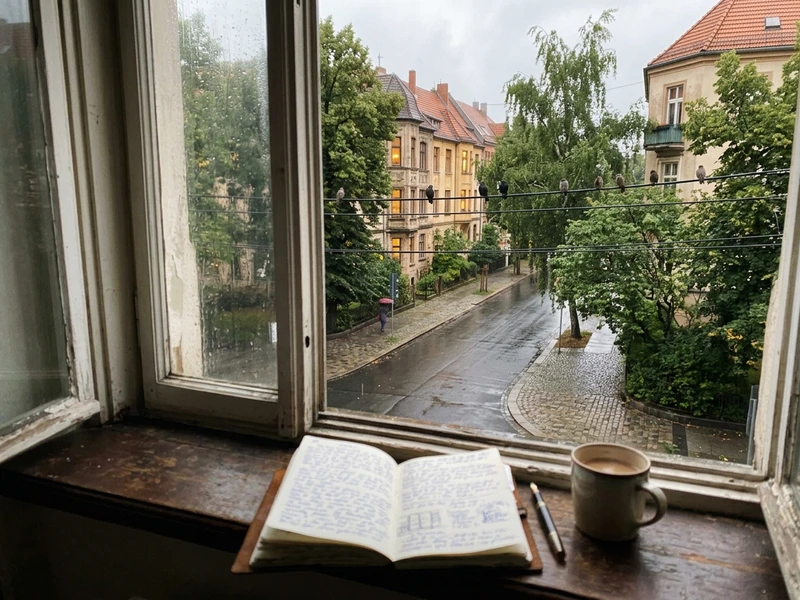
When your inner world feels empty, the outer one is usually still there to describe.
Use a Question Instead of a Blank Page
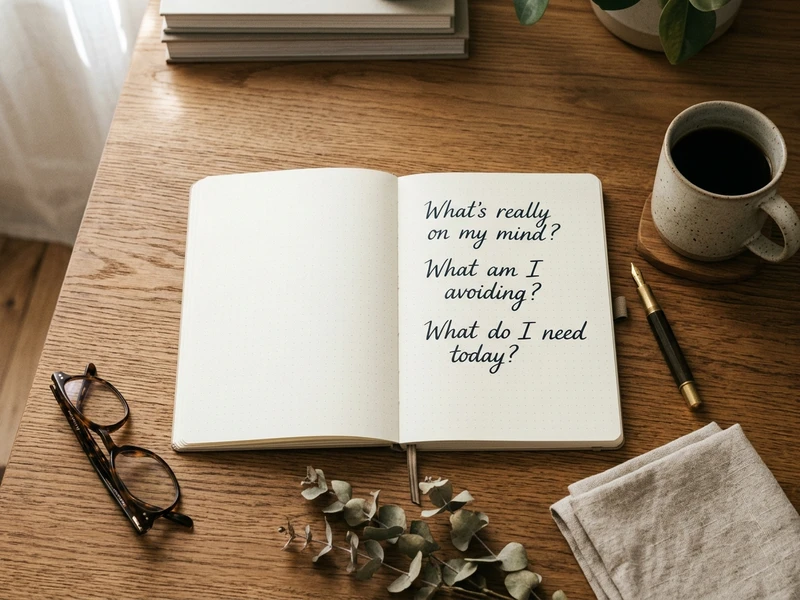
A blank page with no direction is intimidating. A single question gives your mind somewhere to start.
Let It Be Bad on Purpose
A lot of journaling paralysis actually comes from expecting the entry to be good, insightful, or worth rereading later.
Build the Habit Before You Worry About the Content

Not knowing what to write is often less about inspiration and more about the habit not being established yet.
FAQ: How to Journal When You Don’t Know What to Write
Julia Cameron didn’t solve her creative block by waiting for something worth saying. She solved it by writing anyway, badly if needed, three pages at a time, until the page itself did the work of clearing her head. The same is true for anyone staring at a blank journal with nothing to say. You don’t need something meaningful yet. You just need to start writing, and let whatever’s actually there find its way out.


