
How to Stay Consistent With Habits (The Seinfeld Method, Sort Of)
how to stay consistent with habits featured

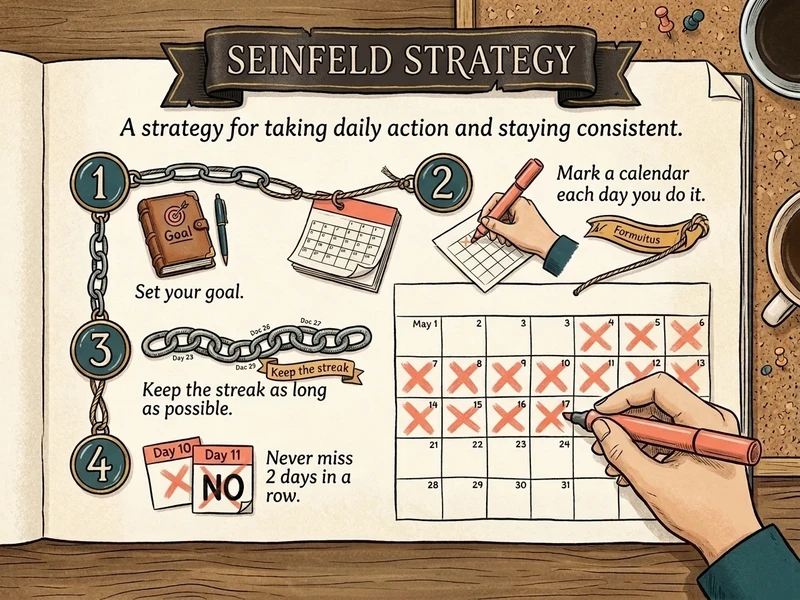
The story has been repeated in countless articles, books, and productivity talks. A young comedian named Brad Isaac ran into Jerry Seinfeld backstage at a comedy club early in his career and asked for advice. Seinfeld told him the way to become a better comic was to write jokes every single day, and gave him a specific method to make that happen. Get a large wall calendar showing the whole year on one page. Get a big red marker. Every day you write, put a red X on that day. “After a few days you’ll have a chain,” Seinfeld reportedly said. “Just keep at it and the chain will grow longer every day. Your only job is to not break the chain.”

The method spread everywhere, habit trackers, apps, productivity blogs, all crediting Seinfeld with what became known as the Seinfeld Strategy. There’s just one problem. When asked about it directly during a Reddit AMA, Seinfeld denied any part in creating it. “This is hilarious to me,” he wrote, “that somehow I am getting credit for making an X on a calendar with the Seinfeld productivity program. It’s the dumbest non-idea that was not mine, but somehow I’m getting credit for it.”

Whether or not Seinfeld personally invented it, the method itself, and Isaac’s own account of receiving that advice, is real enough that it’s worth taking seriously on its own terms. The mechanism behind it is simple and genuinely useful for staying consistent with any habit, not because a famous comedian endorsed it, but because visual proof of your own consistency turns out to be one of the more reliable ways to keep showing up.

Why a Visual Streak Works Better Than Willpower Alone

The core mechanism behind the chain method holds up regardless of who actually came up with it.

  • A growing visual record of consistency creates its own motivation, seeing a chain of completed days makes skipping the next one feel like a real loss, not a neutral choice
  • This taps into a documented psychological pattern, small, visible wins reinforce the behavior that produced them, making repetition more likely
  • Unlike relying purely on remembering why the habit matters, a visual chain gives you an immediate, tangible reason to continue each day
  • The method works specifically because it makes consistency itself the measurable goal, not just the underlying task

Set Up Your Own Chain

how to stay consistent with habits set up your chain

The mechanics are simple enough to start today regardless of the method’s disputed origin.

  • Choose one specific, clearly defined habit to track, not several at once, since a single chain is easier to maintain and easier to see clearly
  • Use a visible calendar, physical or digital, somewhere you’ll actually see it daily, not buried in an app you rarely open
  • Mark each successful day immediately after completing the habit, rather than trying to catch up later and losing the immediate reinforcement
  • Keep the marking itself simple, an X, a checkmark, a dot, the format matters less than the visible, growing pattern it creates

Define “Done” Clearly Before You Start
how to stay consistent with habits define done clearly

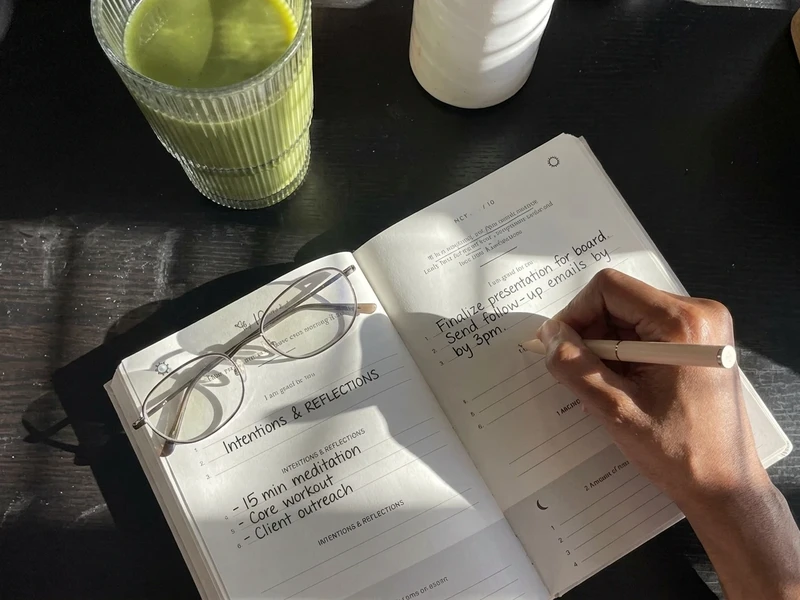
A chain only works if it’s honest, which means knowing exactly what counts as a completed day before you begin.

  • Decide in advance what specifically counts as completing the habit, one page written, ten minutes exercised, one entry journaled
  • Keep the bar low enough to be realistic on a bad day, a chain built around an unrealistic daily standard tends to break quickly
  • Avoid vague definitions like “worked on it,” since ambiguity makes it too easy to mark a day that wasn’t actually a real win
  • A clear, honest standard protects the chain’s actual value as proof of consistency, not just a decorative streak

Plan for the Day You’ll Want to Skip

how to stay consistent with habits plan for skip day

Every meaningful streak eventually meets a day where motivation is genuinely low, and it helps to have a plan ready before that happens.

  • Decide ahead of time on a minimum viable version of the habit for hard days, a shorter version that still counts honestly
  • Treat showing up in a smaller way as a real win, not a lesser one, since it keeps the chain and the habit itself intact
  • Notice that the temptation to skip “just this once” tends to be strongest right when the chain has grown long enough to matter
  • Protecting the streak on a hard day often matters more for long term consistency than any single strong day did

Don’t Let One Missed Day End the Whole Effort

how to stay consistent with habits dont end the effort

Chains do eventually break, and how you respond to that moment tends to matter more than the streak itself.

  • A broken chain is not proof the method failed or that you failed, it’s simply a missed day
  • Restart the count immediately rather than waiting for a symbolic new beginning, a new month, a new year
  • Some people find it useful to track total days completed across the whole effort, not just the current streak, so one break doesn’t erase all visible progress
  • The habit itself, not the unbroken streak, is the actual goal, treat the chain as a tool supporting that, not the point in itself
  • Many people don’t lose a habit because they miss one day. They lose it because they decide that one missed day means they’ve failed.The chain method works best when you expect imperfection from the beginning.

FAQ: How to Stay Consistent With Habits

No, according to Seinfeld himself. He directly denied any involvement when asked in a Reddit AMA, despite the method being widely attributed to him based on a secondhand account from another comedian.

A growing visual record of completed days creates its own motivation, making a missed day feel like a real, visible loss rather than a neutral skip. It also gives immediate reinforcement for showing up, rather than relying purely on remembering why the habit matters.

Restart immediately rather than waiting for a symbolic new beginning. A broken chain reflects one missed day, not a failed effort, and the underlying habit remains the actual goal, not the unbroken streak itself.

Define a minimum viable version of the habit ahead of time, a shorter or smaller version that still honestly counts, so you can protect the chain and the habit even on a low motivation day.

Whether or not Jerry Seinfeld ever actually gave that advice backstage, the method has outlived the argument over who it belongs to. A visible, honest record of showing up, day after day, turns out to be one of the simplest tools for actual consistency, not because a celebrity’s name is attached to it, but because watching your own chain grow is motivating enough on its own.

Similar Posts

Leave a Reply

Your email address will not be published. Required fields are marked *