How to Journal When You Don’t Know What to Write

journal dont know what to write featured

In the 1980s, Julia Cameron was a working screenwriter and filmmaker, recently sober, and completely unable to write. The blank page, which used to feel exciting, had turned into something closer to dread. So she started doing something almost embarrassingly simple. Every morning, before anything else, she sat down and filled three pages with whatever was in her head. Not good writing. Not even necessarily writing that made sense. Just words, moving down the page.

She called it morning pages, and it became the foundation of her book The Artist’s Way, one of the most widely used creativity practices of the last few decades. What made it work wasn’t a clever prompt or a perfect method. It was permission. As she put it, there is no wrong way to do morning pages, they aren’t even really “writing” in the way we usually mean it, just whatever’s crossing your mind, for your eyes only.

That permission is the actual answer to “I don’t know what to write.” You’re allowed to write badly, write nothing important, write the same complaint five days in a row. The page doesn’t need you to have something meaningful to say before you start.

Write “I Don’t Know What to Write” Until You Do

This sounds like a joke, but it’s a real, documented part of how morning pages are meant to work.

  • If you’re stuck, literally write “I don’t know what to write” and keep repeating some version of it
  • Cameron’s own guidance is blunt about this, you can fill pages with “blah blah blah, this is stupid,” and it still counts
  • Most people find that somewhere in that repetition, something else surfaces on its own, a worry, a memory, a stray thought worth following
  • The goal isn’t producing something worth reading, it’s keeping your hand moving until your mind catches up

Write About Whatever’s Actually Bothering You Right Now

If your mind feels blank, it’s often because something specific is quietly taking up space without you noticing.

  • Name whatever’s nagging at you, even something small, a conversation you’re replaying, a task you’re avoiding
  • Write it exactly as messy as it actually is in your head, no need to organize it into something coherent
  • If nothing feels urgent, try writing about how your body feels right now, tired, restless, calm, and go from there
  • Journaling doesn’t require a topic worth writing about. It requires whatever’s actually true right now, however small

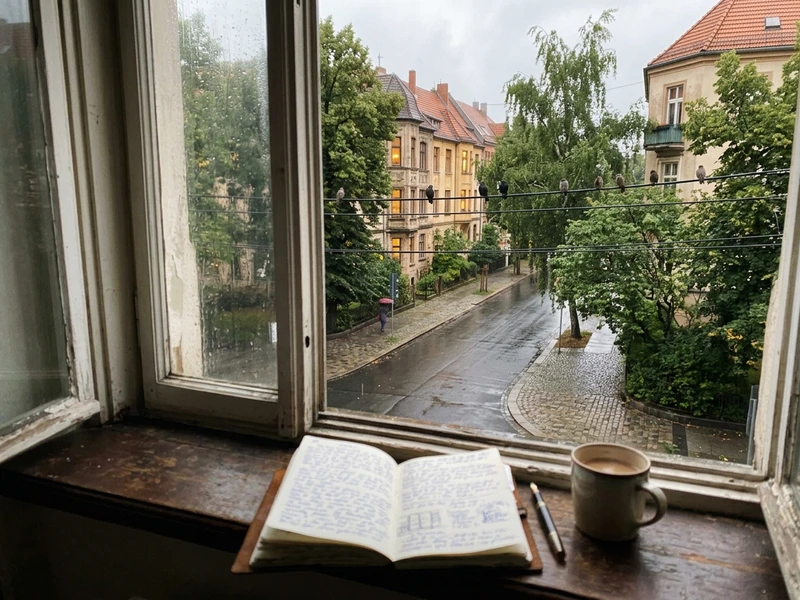
Describe Your Surroundings Instead of Your Thoughts

journal dont know what to write describe surroundings

When your inner world feels empty, the outer one is usually still there to describe.

  • Write down exactly what you can see, hear, and feel in the room right now
  • Describe the last meal you ate, the walk you took, the weather outside, in plain, unfiltered detail
  • This kind of writing often loosens something without trying to, since it takes the pressure off having a “real” topic
  • Let the description wander wherever it wants, into a memory, an opinion, a complaint, rather than forcing it to stay factual

Use a Question Instead of a Blank Page

journal dont know what to write use a question

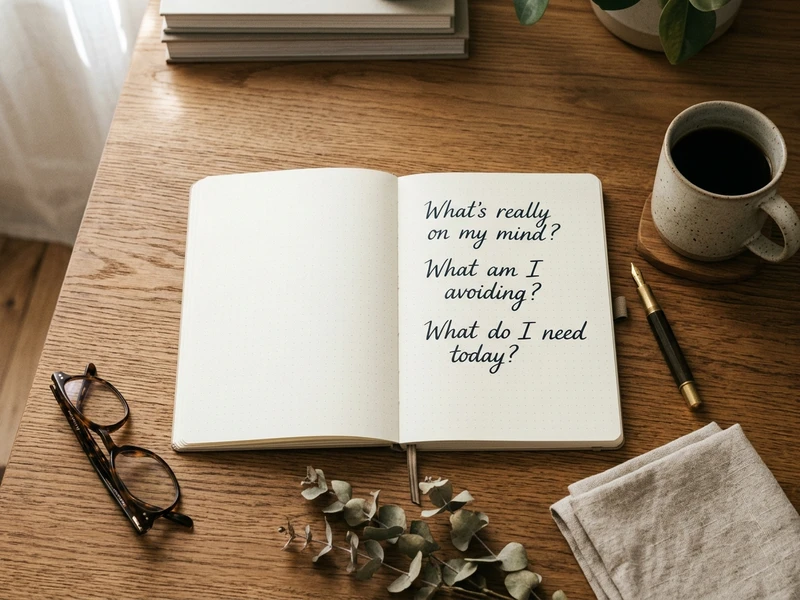
A blank page with no direction is intimidating. A single question gives your mind somewhere to start.

  • Ask yourself something simple and answer it honestly, what’s on my mind, what am I avoiding, what do I actually want right now
  • Don’t overthink the question, an ordinary one works better than a profound one you feel pressure to answer well
  • If the first answer feels shallow, ask “why” once more and see what comes up
  • Keep a short list of a few go to questions somewhere handy for exactly this moment

Let It Be Bad on Purpose

A lot of journaling paralysis actually comes from expecting the entry to be good, insightful, or worth rereading later.

  • Give yourself explicit permission to write something forgettable, repetitive, or even boring
  • Remind yourself the page is not an audience, no one is grading this or expecting it to be meaningful
  • Cameron’s own point was that the pages aren’t meant to be “art,” they’re meant to clear out whatever’s cluttering your head so something clearer can follow
  • Ironically, entries written with zero pressure to be good often end up being the most honest ones you write

Build the Habit Before You Worry About the Content

journal dont know what to write build the habit

Not knowing what to write is often less about inspiration and more about the habit not being established yet.

  • Journal at the same time daily if you can, so it becomes something you simply do rather than something you have to decide to start
  • Set a low bar for what counts, even a few sentences is a real entry, not a failed attempt
  • Keep your journal somewhere visible rather than tucked away, so opening it doesn’t require extra effort
  • The words tend to come more easily once the habit itself stops requiring willpower every single time
  • What to Do When You Miss a Day of Journaling

    Don’t try to “catch up” by writing multiple entries.
    Simply open your journal and begin where you are today.
    Avoid judging yourself for missing days.
    Consistency matters more than streaks.
    Remember that journaling is a practice, not a performance.

FAQ: How to Journal When You Don’t Know What to Write

Yes, and it’s a real, documented technique, most notably from Julia Cameron’s morning pages practice. Repeating that phrase often loosens something else that was underneath it, waiting to come out.

No. Journaling that’s genuinely useful is often plain, repetitive, or even boring to reread. The value is in the process, not in producing something polished.

Describe your physical surroundings or how your body feels right now. Starting with something concrete and immediate tends to be easier than starting with an abstract thought.

Lower the bar for what counts as a real entry, even a few sentences, and attach it to something you already do daily so it becomes routine rather than a decision you have to make each time.

Julia Cameron didn’t solve her creative block by waiting for something worth saying. She solved it by writing anyway, badly if needed, three pages at a time, until the page itself did the work of clearing her head. The same is true for anyone staring at a blank journal with nothing to say. You don’t need something meaningful yet. You just need to start writing, and let whatever’s actually there find its way out.

Similar Posts

Leave a Reply

Your email address will not be published. Required fields are marked *