Morning Habit Stack: How to Build One That Sticks

Most people try to build a better morning by adding a pile of new habits all at once. Meditate, journal, exercise, read, drink a full glass of water, avoid your phone, all starting tomorrow. It rarely survives past day four, not because the habits are wrong, but because starting from nothing is genuinely hard to sustain.
A morning habit stack works differently. Instead of building new habits from scratch, you attach them to something you already do without thinking, your first cup of coffee, brushing your teeth, getting out of bed. The existing habit becomes the trigger for the new one, so you’re not relying on memory or motivation to make it happen.
This is a real, well known method, sometimes called habit stacking, and it works because it removes the hardest part of building a new habit, remembering to start it in the first place.
What a Habit Stack Actually Is
A habit stack is simply a new habit attached to the end of an existing one. You already have dozens of automatic habits built into your morning without realizing it, getting out of bed, turning off your alarm, walking to the kitchen, making coffee. Those existing habits happen without effort because you’ve done them so many times your brain doesn’t need to think about them anymore.
A habit stack borrows that automatic quality. Instead of trying to remember a new habit on your own, you tie it directly to something that already happens reliably. The old habit becomes the cue. The new habit becomes the response.
The Simple Formula for Building One
The basic structure looks like this.
After I [current habit], I will [new habit].
For example, after I pour my coffee, I will write three lines in my journal. After I brush my teeth, I will stretch for two minutes. After I sit down at my desk, I will write my top three priorities for the day.
The specificity matters here. A vague intention like “I’ll journal more in the mornings” gives your brain nothing concrete to attach to. “After I pour my coffee, I will journal” gives it an exact trigger and an exact action, which is what actually makes it repeatable.
Morning Habit Stack Examples

Here are a few full stacks to give you a sense of how they come together. You don’t need to copy these exactly, use them as a template for building your own.
A calm, slower stack: After I wake up, I will drink a full glass of water. After I drink the water, I will sit for two minutes before checking my phone. After those two minutes, I will write one line about how I’m feeling.
A productivity focused stack: After I sit down at my desk, I will write my top three priorities. After I write my priorities, I will silence notifications for the first hour. After that hour, I will take a five minute break away from my screen.
A movement focused stack: After I get out of bed, I will stretch for three minutes. After I stretch, I will put on clothes I could exercise in. After I’m dressed, I will do ten minutes of movement, even just a short walk.
A minimal stack for busy mornings: After I pour my coffee, I will write one sentence about my main goal for the day. After that sentence, I will check my calendar for the day ahead.
Notice each stack has two to four steps, not ten. That’s intentional. A longer stack is harder to maintain, especially early on.
How to Build Your Own Morning Habit Stack

Start by listing three or four things you already do every single morning without fail, no matter how the day is going. This might be as simple as turning off your alarm, walking to the bathroom, or making coffee. These become your anchors.
Next, pick one single habit you actually want to build, not five. Pick the one that would make the biggest difference in how your mornings feel, not the one that sounds most impressive. Attach it to one of your existing anchors using the formula above.
Keep the new habit small enough that it’s almost impossible to skip. Two minutes of stretching is more sustainable than a twenty minute workout when you’re just starting. You can always expand it once it’s automatic. Trying to start big is one of the most common reasons habit stacks fall apart in the first two weeks.
Once the first habit feels automatic, and only then, consider adding a second one to the end of the stack. Building one at a time is slower, but it’s far more likely to actually last.
Common Mistakes That Break a Habit Stack
Stacking too many habits at once. A five step morning stack sounds great on paper and falls apart the first time you’re running late. Start with one or two.
Choosing an inconsistent anchor. If your existing habit doesn’t happen the same way every day, like a shower you sometimes skip, it makes an unreliable trigger for the new habit. Pick anchors that genuinely happen without fail.
Making the new habit too big. A habit stack works because the new habit is small enough to do even on a bad day. If the new habit takes real effort or motivation, it’s not a stack, it’s just a task you’re hoping to remember.
Giving up after one missed day. A single missed morning doesn’t undo weeks of consistency. Treating it that way is often what actually breaks the habit, not the missed day itself.
What to Do When You Miss a Day

Mornings get disrupted. Travel, poor sleep, an early meeting, a rough night. When that happens, the habit stack doesn’t need to be rebuilt from scratch, it just needs to be picked back up the next available morning.
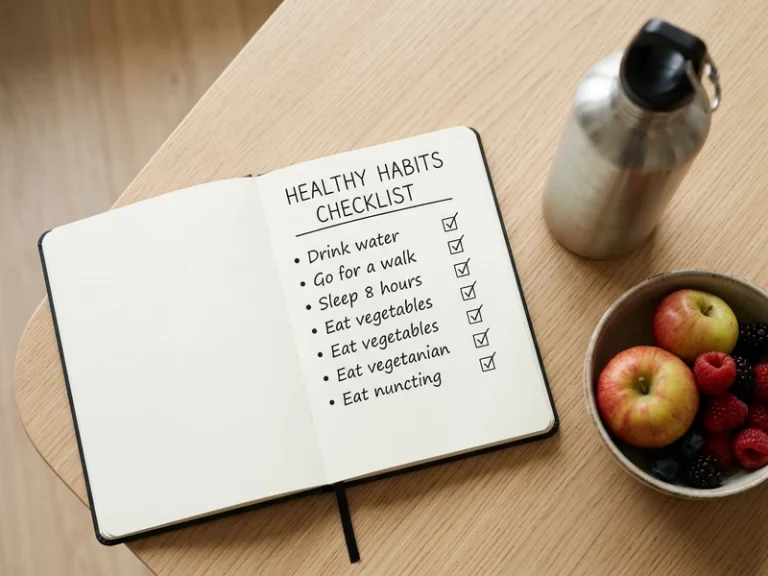
If you notice you’re missing the stack regularly, that’s usually a sign the new habit is too big, the anchor isn’t consistent enough, or you’re trying to stack too many things at once. Adjust the stack itself rather than assuming the method doesn’t work for you. If your evenings tend to set up rough mornings, our evening journal prompts can help you wind down in a way that makes the next morning easier to actually follow through on. And once your first habit feels automatic, our healthy habits checklist is a good place to find what to add next.
If your evenings tend to set up rough mornings, our evening journal prompts can help you wind down in a way that makes the next morning easier to actually follow through on. And once your first habit feels automatic, our healthy habits checklist is a good place to find what to add next.
FAQ: Morning Habit Stack
A morning habit stack isn’t about transforming your whole morning overnight. It’s about attaching one small, consistent action to something you’re already doing without thinking, so it eventually stops requiring effort at all. Start with one habit, one anchor, and let it become automatic before adding anything else.