
Life Reset Guide (Backed by Real Research on Why Timing Matters)
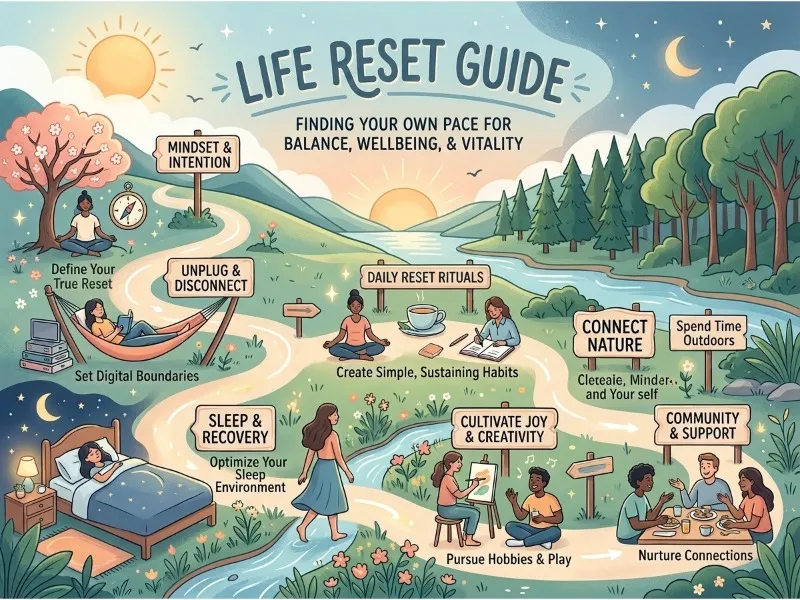
life reset guide

Wharton professor Katy Milkman noticed something odd in the data. Google searches for the word “diet” spike every Monday. Gym visits jump at the start of a new month. Commitments to pursue a goal cluster around birthdays, semesters, and the first days of January. She and her colleagues Hengchen Dai and Jason Riis studied this pattern formally, and in 2014 published their findings in the journal Management Science under a name that’s since become widely known, the fresh start effect.

Their research found people are 33 percent more likely to exercise at the start of a new week, and 47 percent more likely at the start of a new semester. The effect isn’t just about convenience or a fresh calendar page. Milkman explained the psychology behind it directly: temporal landmarks create distance from our past failures. “Those failures are the old you,” she said, “and this is the new you.” That mental separation is what actually powers a fresh start, not the date itself, but the sense that whoever struggled before isn’t quite the same person starting now.

This matters for anyone trying to reset their life, because it means the impulse to wait for the “right moment,” a new year, a birthday, a Monday, isn’t just superstition. It’s a real, measurable psychological pattern. The trick is knowing how to actually use it, rather than just waiting passively for January to roll around again.

Why “Starting Over” Feels Easier at Certain Times

Milkman’s research explains something most people have felt without having language for it.

  • A new week, month, or year creates real psychological distance from recent setbacks, making it easier to mentally separate from past failures
  • This effect isn’t limited to major landmarks, even smaller markers like the start of a new week showed a measurable boost in follow through
  • The research found “the first day of spring” outperformed an arbitrary date like “the third Thursday of March,” even though nothing about the calendar actually changes
  • Understanding this means you don’t have to wait for January, you can create your own meaningful starting point whenever you’re ready
life reset

Choose Your Own Fresh Start Date Deliberately

Since the effect is about perception as much as timing, you can use it intentionally rather than waiting for a landmark to arrive naturally.

  • Pick a specific, meaningful date to begin your reset rather than starting vaguely “soon”
  • Attach some significance to it if you can, the start of a new month, a birthday, the first day back from a trip, so it feels like a real dividing line
  • Write the date down and treat it the way you would any other real commitment
  • If the date you want is weeks away, use that time to plan rather than waiting passively for it to arrive

Separate What You’re Resetting From Who You Are

Milkman’s own explanation of the psychology points to something worth applying directly.

  • Frame past struggles as belonging to a specific period, not as a permanent description of who you are
  • Avoid language that turns a setback into an identity, “I failed at this” rather than “I’m a failure”
  • Give yourself permission to genuinely start clean, rather than dragging the full weight of every previous attempt into this one
  • This isn’t about denying what happened, it’s about not letting it define what happens next

Reset One Area at a Time, Not Everything at Once

A life reset doesn’t need to mean overhauling every part of your life simultaneously.

  • Pick the one or two areas that matter most right now, health, work, relationships, mindset, rather than trying to fix everything on the same date
  • A narrower reset is more sustainable and easier to actually follow through on than an all-encompassing one
  • Once one area feels steady, use the next natural landmark, a new month, a new season, to expand into another
  • This mirrors how the research itself found smaller, more frequent landmarks still produced real, measurable effects
Resetting one area at once

Build the Habits That Outlast the Initial Motivation

The fresh start effect explains why people begin, but the actual research also makes clear that beginning isn’t the same as sustaining.

  • Use the extra motivation a fresh start provides to build the actual habit or system, not just to have one good week
  • Plan specifically for the point where initial motivation naturally fades, usually a few weeks in, rather than being surprised by it
  • Attach your reset to concrete daily or weekly actions, not just a general intention to “do better”
  • Treat a stumble after the initial motivation fades as normal, not as proof the reset failed
Building habits that outlast

Use Future Landmarks to Your Advantage

You don’t have to wait for the reset moment to arrive to start benefiting from it.

  • Research following the original study found that even anticipating an upcoming fresh start date can boost motivation ahead of time
  • Use the days leading up to your chosen date to prepare practically, gathering what you need, removing obstacles, telling someone your plan
  • Let the anticipation build real momentum, rather than treating the lead up as dead time before the “real” start
  • If your first attempt at a reset doesn’t fully stick, the next landmark, next week, next month, is always coming, not just next January
  • Your Life Reset Doesn’t Have to Happen All at Once

    Choose one small change that makes your life easier, calmer, or more aligned with the person you want to become. Give it enough time to become familiar before adding another major change.
    And remember: a life reset isn’t about becoming a completely different person. It’s about making deliberate changes that bring your current life closer to the life you actually want.
    You don’t need a new life. Sometimes you just need a new direction.

FAQ: Life Reset Guide

It’s real and peer reviewed, based on a 2014 study by Wharton researchers Hengchen Dai, Katy Milkman, and Jason Riis, published in the journal Management Science, along with follow up research since.

No. The research found smaller temporal landmarks, the start of a week or month, also produced measurable increases in follow through, so any meaningful date you choose deliberately can work.

It’s usually more sustainable to focus on one or two areas at a time rather than attempting a complete overhaul simultaneously, since a narrower reset is easier to actually maintain.

This is normal and expected, usually within a few weeks. Planning concrete habits and systems ahead of time, rather than relying on motivation alone, is what tends to carry a reset past that initial dip.

A life reset doesn’t require waiting for the calendar to hand you permission. The research is clear that meaningful dates genuinely help, but it’s the mental separation from past struggles, not the date itself, that does the real work. Choose a date that feels significant to you, treat your past setbacks as belonging to a different chapter, and build the habits that will still be standing once the initial motivation of starting fresh naturally fades.


Similar Posts

Leave a Reply

Your email address will not be published. Required fields are marked *