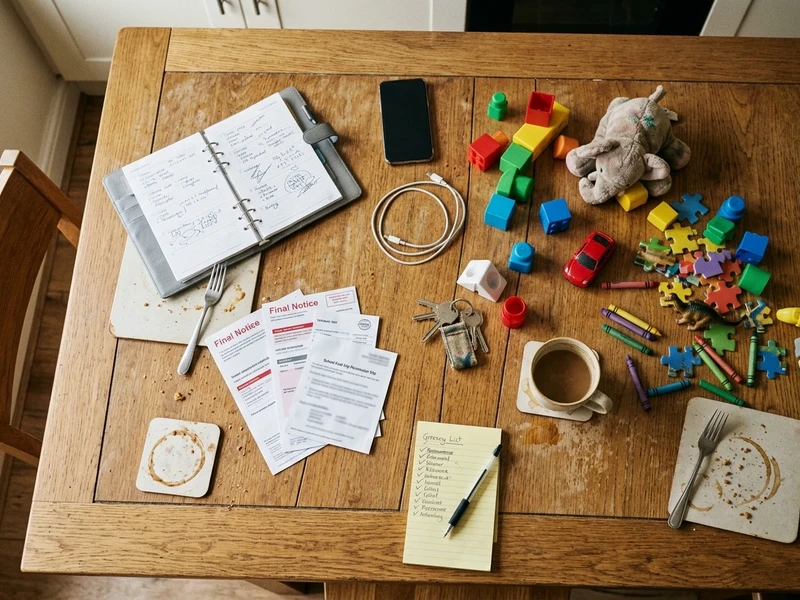
A story that circulated widely online involved a stay-at-home mom whose husband offhandedly described her day as “sitting 85 percent of the time.” Her response, by most retellings, was blunt and exact: she wasn’t sitting, she was keeping a small child alive, tracking naps, meals, safety, and a hundred invisible details that never show up as a task on any list. The exact origin of that exchange is hard to verify with certainty, but the reaction it got, widely shared, widely recognized, says something real. A lot of stay-at-home moms saw themselves in it immediately.
That reaction points to the actual problem with daily routines for stay-at-home moms, and it’s rarely the routine itself. It’s that the job comes with no natural structure built in. No clock in time, no lunch break enforced by an office, no clear end of day. Just a continuous stream of needs, some visible, most not, that don’t pause for you to catch up. A workable daily routine here isn’t really about fitting more in. It’s about creating the structure that a job without one doesn’t hand you for free.
Why “Just Wing It” Rarely Works Long Term
A lot of stay-at-home moms start without a set routine, assuming flexibility is the advantage, and often find the opposite is true.
Without any structure, the day tends to be run entirely by whoever or whatever demands attention loudest, not by your own priorities
Decision fatigue builds quickly when every hour requires deciding what to do next from scratch
A loose routine, even a simple one, tends to reduce daily stress more than most people expect before trying it
Structure isn’t the opposite of flexibility here, a good routine actually creates room for the unexpected instead of letting everything be unexpected
Build the Day Around Anchors, Not a Strict Schedule
A rigid, hour by hour schedule usually breaks the first time a child gets sick or a nap runs long, so anchors work better than a strict timeline.
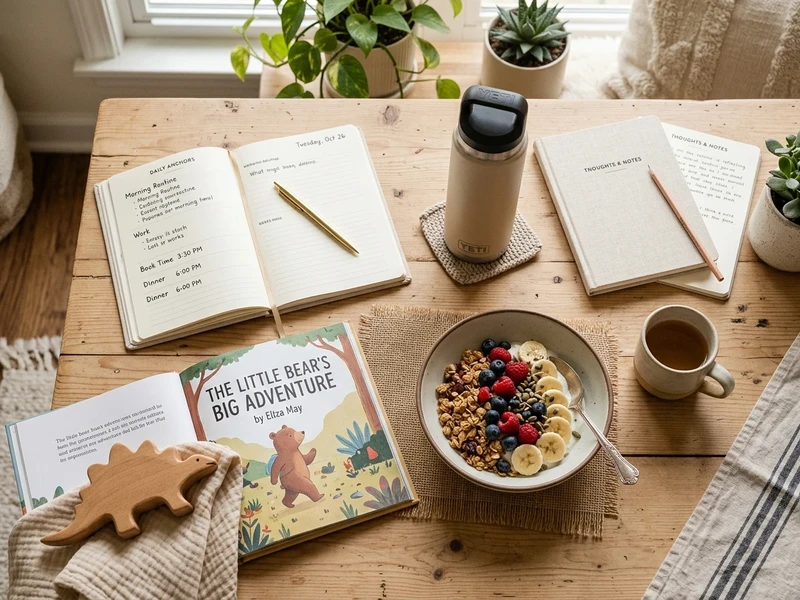
Choose three or four fixed points in the day, wake up, meals, nap or quiet time, bedtime, and build everything else loosely around them
Keep the anchors consistent even when the rest of the day shifts, since predictability for your child also creates predictability for you
Let tasks flow into the space between anchors rather than assigning a strict time to everything
This structure tends to survive bad days far better than a detailed hour by hour plan
Protect One Block of Time That’s Actually Yours
The instinct to fill every spare moment with a household task tends to backfire over time.
Use nap time or quiet time for at least a few minutes of something that’s genuinely yours, not just chores
Even fifteen minutes protected consistently tends to matter more than an occasional longer break that rarely actually happens
Treat this time as a real appointment, not the first thing sacrificed when the to-do list feels long
A day with zero personal time tends to compound into real burnout faster than most people expect
Batch Household Tasks Instead of Spreading Them Through the Day
Constantly switching between childcare and chores tends to be more draining than either task alone.
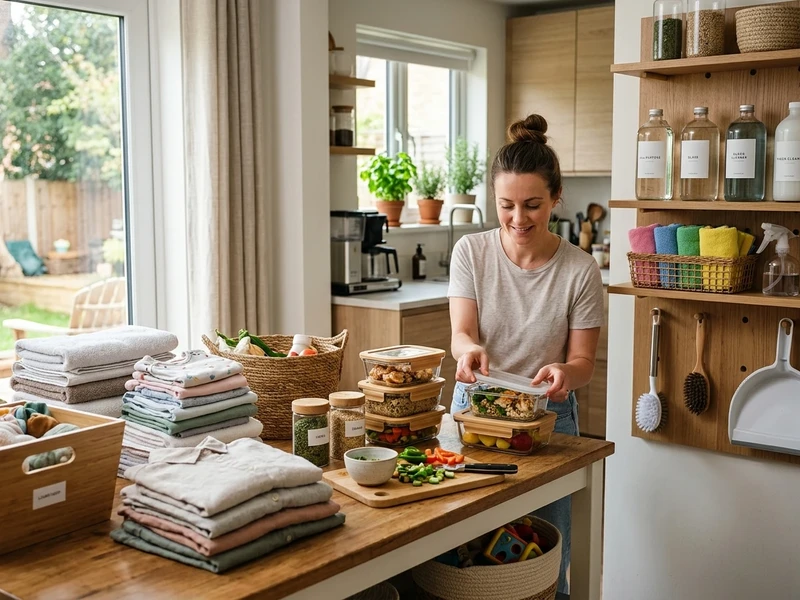
Group similar tasks together, laundry, tidying, meal prep, into set windows rather than doing a little of everything constantly
Use consistent anchor points, right after breakfast, during quiet time, for specific recurring chores so they don’t require a fresh decision daily
Let some tasks wait for a dedicated window rather than trying to squeeze them into every small gap in the day
A slightly messier house during active hours is a reasonable trade for fewer constant task switches
Build In Real Connection, Not Just Logistics
A day can be fully “productive” on paper and still feel isolating, which is a common and rarely discussed part of this role.
Schedule regular contact with other adults, a call, a walk with a friend, a parent group, rather than leaving it to chance
Notice if days are passing with only child-directed conversation, and treat that as worth addressing, not something to just push through
Get outside daily if possible, even briefly, since it tends to help mood more than it seems like it would
A daily routine that only accounts for tasks and misses this tends to feel hollow even when everything technically got done
Let the Routine Flex Without Falling Apart
The goal is a routine resilient enough to survive a bad day, not one that only works when everything goes to plan.
Expect regular disruption, sick days, early wake ups, meltdowns, and build enough slack into the routine that these don’t derail everything
Return to your anchor points the next day rather than trying to make up for a lost day all at once
Adjust the routine as your child’s needs change, rather than assuming what worked six months ago should still work now
A routine that bends without breaking is more useful long term than one that only works under ideal conditions
Signs Your Routine Is Working
You know the next “anchor” without checking a schedule. You have at least one protected moment that’s just for you. Household tasks feel more predictable instead of constant. A disrupted day doesn’t ruin the entire week. You feel less mentally exhausted making decisions all day.
FAQ: Daily Routine for Stay-at-Home Moms
Without natural structure like a workplace provides, every hour requires fresh decisions about what to do next, which builds real decision fatigue over time. A loose routine built around a few fixed anchors tends to reduce that load significantly.
Protect a small, consistent block, even fifteen minutes during nap or quiet time, and treat it as a real commitment rather than the first thing sacrificed. Consistency tends to matter more than the length of the break.
Not necessarily. A routine built around a few fixed anchors, meals, naps, bedtime, tends to hold up better under disruption than a detailed hour by hour schedule, which often breaks the first time something unexpected happens.
Yes, and it’s worth addressing directly rather than assuming a busy day should automatically feel fulfilling. Building in regular adult connection is as much a part of a sustainable routine as managing tasks and childcare.
A good daily routine for a stay-at-home mom isn’t about cramming more into an already full day. It’s about building the structure a job without clock-in times and lunch breaks doesn’t hand you automatically, a few steady anchors, protected time that’s genuinely yours, and enough flexibility that one hard day doesn’t undo the whole thing. The work is real, whether or not anyone else sees it, and the routine should be built to support that, not to prove it.