Slow Morning Routine Ideas That Make Your Day Feel Calmer
slow-morning-routine-ideas

Carl Honoré, a Canadian journalist, was flipping through a newspaper at Rome’s Fiumicino airport when an advertisement caught his eye, a collection of children’s bedtime stories condensed into sixty seconds each. His first reaction was relief. As a self-described “speedaholic,” he’d been racing through storytime with his own young son for years, skipping lines, paragraphs, whole pages of the Brothers Grimm just to get to the next thing on his list. A book that did the skipping for him sounded, at first, like the answer.

Then it hit him. He was so consumed by hurry that he was ready to buy a book whose entire purpose was speeding up the last few unhurried minutes he had with his child each day. “My life had become an endless race against the clock,” he later wrote. “I was always in a hurry, scrambling to save a minute here, a few seconds there.” His own son, it turned out, always caught him anyway, once asking, “Daddy, why are there only three dwarves in the story?”

That airport moment became the spark for Honoré’s book In Praise of Slowness, which is now widely credited with helping launch the modern Slow Movement. His central point wasn’t that slower is always better. It was that we’d stopped choosing our own pace entirely, applying maximum speed to everything, even the parts of life that were never meant to be rushed. A morning is one of those parts. Here’s how to actually build one that isn’t running from the moment your eyes open.
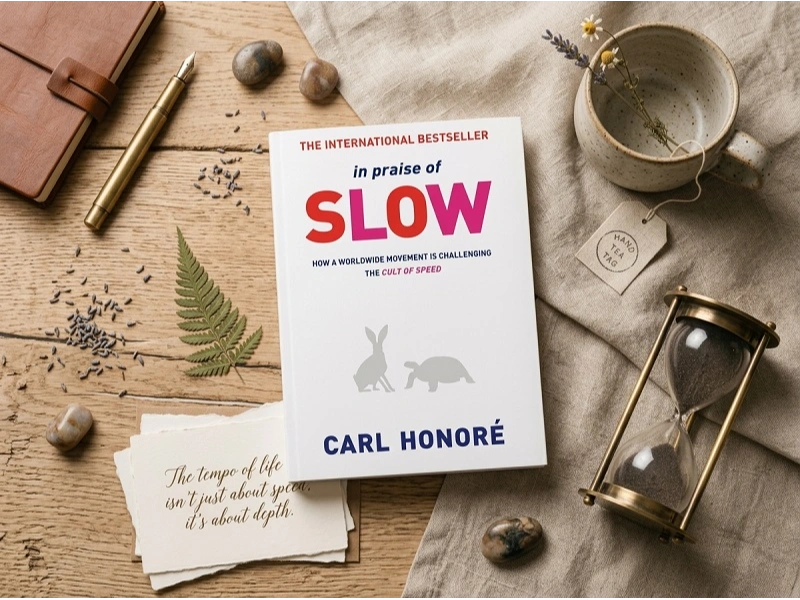
a book showing slow-living inspiration

Why Mornings Became the First Casualty of a Rushed Life

Honoré’s broader argument applies directly to how most people currently experience their first hour awake.

  • A morning built entirely around efficiency, alarm, phone, rush, out the door, treats the start of your day as a problem to be solved quickly rather than time worth having
  • Honoré’s research pointed to something counterintuitive, that slowing down at the right moments tends to make people more effective later, not less
  • Speed has quietly become the default setting for mornings specifically because they’re the first block of time most people control each day
  • A slow morning routine isn’t about having more free time, it’s about deliberately choosing pace instead of defaulting to rushing

Wake Up Without Immediately Racing the Clock

The tone of a slow morning is set in the first few minutes, often before you’re even out of bed.
  • Avoid checking your phone as the very first action of the day, since it tends to import the rest of the world’s urgency before you’ve even stood up
  • Give yourself a few minutes of stillness before moving, even just lying there awake, rather than launching straight into motion
  • Wake up slightly earlier than strictly necessary, not to add tasks, but to remove the built in pressure of a tight morning window
  • Let your first movements be unhurried on purpose, since the pace you start with tends to carry through the rest of the morning
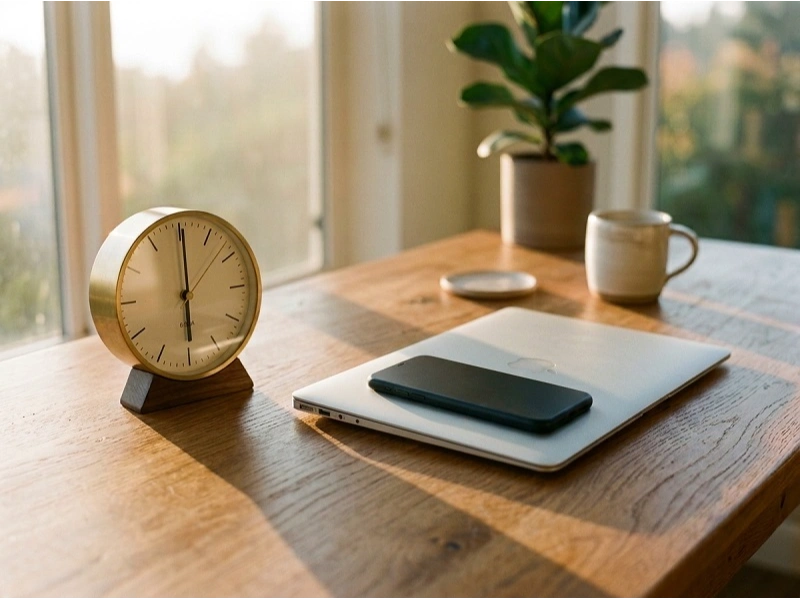
Analog clock beside a closed laptop and phone representing protected morning time.

peaceful-sunrise-morning-routine

Build in One Unhurried Ritual You Actually Enjoy

A slow morning needs at least one activity done without any efficiency goal attached to it at all.

  • Make coffee or tea slowly and deliberately, treating the process itself as worth doing well, not just a step toward caffeine
  • Sit somewhere comfortable while you drink it, rather than standing at the counter already thinking about the next task
  • Read something unhurried, a few pages, a magazine, nothing you’re trying to finish quickly
  • Let this ritual be genuinely unproductive, its value is in the pace, not in what it accomplishes

Move Your Body Gently Instead of Rushing Into the Day

Movement can be part of a slow morning without turning into another item to check off quickly.
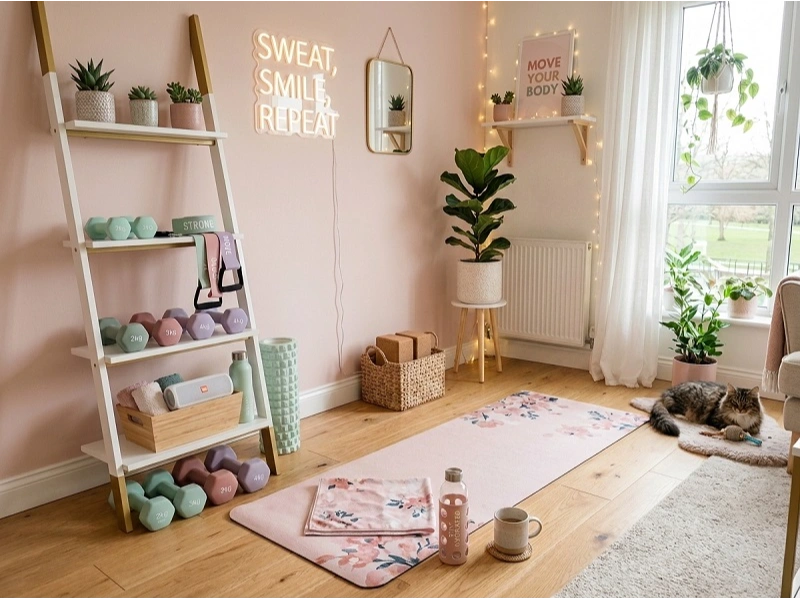
  • A short, unhurried stretch or a slow walk tends to fit the tone of a slow morning better than an intense workout squeezed into a tight window
  • Notice how your body feels rather than treating movement purely as a box to tick
  • If exercise is part of your routine, give it its own unhurried time rather than rushing through it to get to the next thing
  • Let movement wake you up gradually, the same way the rest of a slow morning is meant to unfold
exercise setup beside a window during sunrise as part of a slow morning routine.

Eat Breakfast Like It’s Actually a Meal

Honoré specifically named rushed eating as one of the clearest casualties of a fast paced life, and breakfast is often the worst offender.
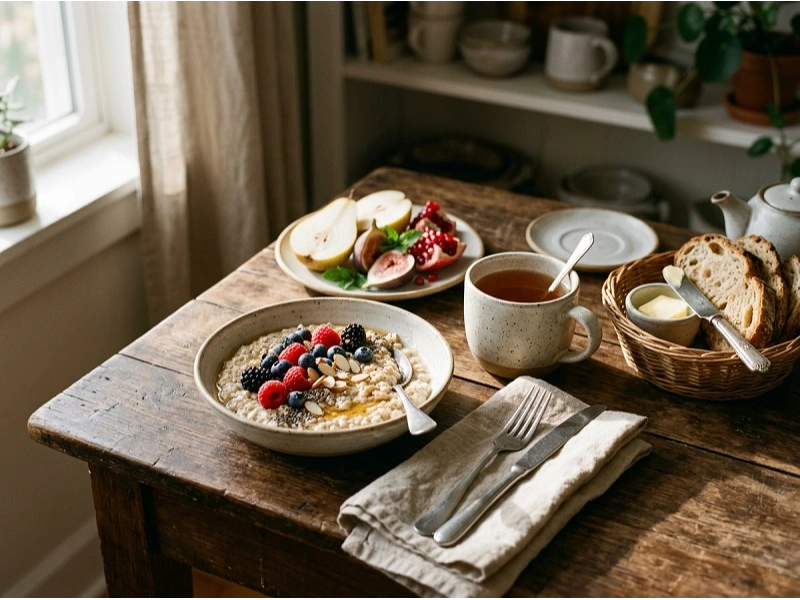
  • Sit down to eat rather than eating while doing something else, standing, scrolling, already halfway out the door
  • Give the meal a few unhurried minutes, even if it’s simple, rather than treating it as fuel to get through quickly
  • Notice the food itself, taste, texture, rather than eating on autopilot while thinking about the day ahead
  • A slower breakfast tends to leave people feeling more settled going into the rest of the day, not just physically fuller
slow-breakfast-routine

Protect the Slow Morning From Creeping Urgency

A slow morning is fragile, and it’s worth being deliberate about defending it once you’ve built it.

  • Leave a genuine buffer of time before you have to be anywhere, so the pace of the morning doesn’t collapse under a tight deadline
  • Resist the pull to add “just one more task” to an otherwise unhurried morning, since that’s usually where the whole rhythm breaks
  • Notice which specific habits, checking email early, rushing to plan the day, tend to reintroduce urgency, and address those directly
  • A slow morning doesn’t require unlimited time, it requires protecting the small amount of time you do have from being rushed

FAQ: Slow Morning Routine Ideas

Not necessarily. It’s less about adding a lot of extra time and more about protecting a genuine buffer so the morning isn’t immediately rushed, even fifteen to twenty extra minutes can make a real difference.

It can be scaled to fit almost any schedule. The core idea, choosing your pace deliberately for at least part of the morning rather than defaulting to rushing, can apply to a single unhurried cup of coffee just as much as an hour long routine.

Begin with one small change, not checking your phone immediately upon waking, or sitting down for breakfast instead of eating on the go. Small, consistent shifts tend to be more sustainable than overhauling the entire morning at once.

Research referenced by Carl Honoré and others in the slow living space suggests that time pressure narrows thinking and creativity, while a calmer, unhurried state tends to support clearer thinking, meaning a slower morning can genuinely support a more effective day, not just a more pleasant one.

Carl Honoré didn’t set out to start a movement. He caught himself trying to speed up a bedtime story, and realized how far the habit of rushing had crept into parts of his life that were never meant to be efficient. A slow morning works from that same recognition. It’s not about having more time than everyone else, it’s about refusing to let the first part of your day be raced through by default, the same way he decided the last few minutes of his son’s day deserved better than sixty seconds could give it.

Similar Posts

Leave a Reply

Your email address will not be published. Required fields are marked *