
Evening Wind-Down Routine (Starting With a Broken Cheekbone)

evening wind down routine featured

On the morning of April 6, 2007, Arianna Huffington woke up on the floor of her own office, bleeding from a cut near her eye and a broken cheekbone. Two years after co-founding The Huffington Post, she’d been working eighteen hour days, seven days a week, sleeping three to four hours a night, treating exhaustion as the price of ambition. Her body simply gave out. She collapsed, hit her head on the corner of her desk, and woke up in a pool of blood.

Doctors ran a full battery of tests, brain scans, echocardiograms, looking for a medical explanation. There wasn’t one beyond the obvious. As she later put it, the diagnosis was extreme exhaustion, plain and simple. Sitting in waiting rooms during that stretch, she started asking herself a harder question than any doctor had, whether the life she was living actually resembled the success she thought she was building.

That collapse became the seed of her book The Sleep Revolution and eventually led her to leave the company she’d spent over a decade building, to start Thrive Global instead. Her conclusion, after years of research into her own wake-up call, was almost embarrassingly simple. “It’s clear,” she wrote, “that if we’re going to truly thrive, we must begin with sleep.” And sleep, she found, doesn’t start at bedtime. It starts with what you do in the hour or two before it.

Why the Hour Before Bed Matters More Than People Think

evening wind down routine hour before bed

Huffington’s own research pointed to something most people underestimate entirely.

  • Falling asleep easily isn’t just about how tired you are, it’s heavily influenced by what your mind and body were doing right before
  • A mind still running at full speed from work or screens doesn’t switch off the moment you get into bed
  • Huffington found that “how tough it is to wind down” was, by far, the most common sleep complaint people brought to her after her book came out
  • Treating the wind-down period as part of your actual sleep routine, not just the time before it, tends to make the biggest difference

Build a Real Ritual, Not Just an Absence of Work

evening wind down routine build a ritual

Huffington has been specific about what she actually recommends, and it’s less about restriction and more about replacement.

  • Choose an activity that genuinely signals to your body that the day is ending, a hot bath or shower, calming music, reading something unrelated to work
  • Make it consistent enough that your body starts to recognize it as a cue, not something you only do occasionally
  • Avoid ending the day on something stimulating or stressful if you can help it, since your mind tends to carry that energy into bed with you
  • The specific ritual matters less than doing the same one regularly enough for it to actually become a signal

Put Technology to Bed Before You Go to Bed
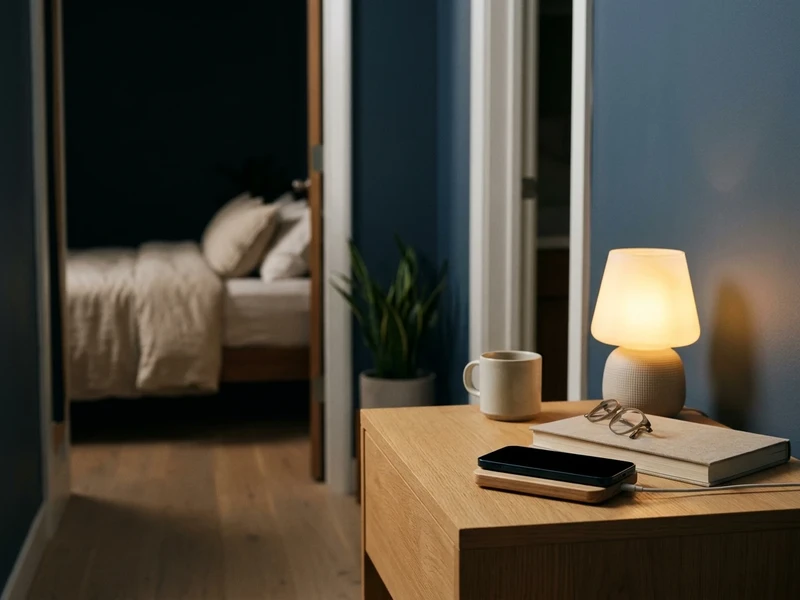
evening wind down routine tech to bed

This is one of Huffington’s most consistent and specific pieces of advice, treating your devices the way you’d treat yourself.

  • Charge your phone outside the bedroom if at all possible, rather than keeping it within reach overnight
  • Huffington has described creating a small designated space, a “charging station,” for devices to recharge overnight while you do the same
  • Avoid screens, especially blue light heavy ones, in the final thirty minutes to an hour before sleep
  • Being in what she calls a constant state of heightened digital anticipation makes it much harder to actually wind down, even once the phone is finally put away

Separate the End of Your Workday From the Start of Your Evening

evening wind down routine separate workday

One of the harder shifts Huffington describes making was drawing an actual line between working and not working.

  • Set a specific point in the evening after which work related messages and tasks genuinely stop, rather than trailing off gradually
  • Notice if “just checking one more thing” has quietly become part of your nightly routine, and treat that as worth addressing directly
  • Use a consistent activity to mark the transition, closing your laptop fully, changing clothes, a short walk, something that signals the switch clearly
  • The goal isn’t perfect discipline every night, it’s having a real boundary to return to when the days get demanding

Build a Simple, Repeatable Sequence

A short, consistent wind-down sequence tends to work better than an elaborate one you won’t actually keep up with.

  • Pick two or three calming activities and do them in the same order most nights, rather than improvising something new each evening
  • Keep the sequence short enough that it’s realistic even on a tired or busy night, ten to twenty minutes is often enough
  • Let the sequence end in your bedroom, so the last thing you’re doing is already part of settling in, not still transitioning from the rest of the day
  • Consistency, more than any single activity, is what eventually makes falling asleep easier
  • “The 60-Minute Wind-Down Formula”

    60 Minutes Before Sleep
    Finish demanding work tasks
    Dim bright lights
    Stop checking unnecessary notifications
    30 Minutes Before Sleep
    Put your phone on charging away from your bed
    Take a warm shower or bath
    Read something relaxing
    10 Minutes Before Sleep
    Write tomorrow’s priorities
    Practice gratitude or reflection
    Prepare your bedroom for rest

FAQ: Evening Wind-Down Routine

Ten to twenty minutes of consistent, calming activity is often enough. A short routine you’ll actually do every night tends to work better than an elaborate one you’ll skip when you’re tired.

Being physically tired doesn’t automatically mean your mind has switched off. A body and mind still running at full speed right up until bedtime, especially from screens or work, tends to make falling asleep harder regardless of how tired you actually are.

It’s one of the most consistently recommended changes for a reason. Keeping your phone within reach tends to keep you in a state of digital anticipation that works directly against winding down, even if you’re not actively using it.

Pick one or two calming activities you can realistically repeat every night, a bath, reading, quiet music, and do them in the same order consistently. The specific activity matters less than the repetition itself.

Arianna Huffington didn’t slow down because someone told her to. She slowed down after her body forced the issue, waking up on the floor of her own office with a broken cheekbone. Most people won’t need a moment that dramatic to take an evening wind-down routine seriously, but her conclusion is worth taking at face value anyway. The day doesn’t actually end when you decide it does. It ends with whatever ritual you build to genuinely tell your mind and body it’s safe to stop.

Similar Posts

Leave a Reply

Your email address will not be published. Required fields are marked *