
Self Motivation: How to Get Yourself Moving When You Don’t Feel Like It

You know that thing you’ve been meaning to do? Maybe it’s the workout you promised yourself you’d start, the course you’ve been wanting to finish, the project you’ve been putting off, or even something as simple as cleaning the room you’ve been avoiding all week. You know what needs to be done, and you may have even planned exactly when you’re going to do it. Yet when the moment finally arrives, you suddenly find yourself scrolling through your phone, thinking you’ll start in a little while.
A little while turns into an hour. Then it’s getting late, so tomorrow suddenly sounds like a much better option. Tomorrow arrives, and somehow you’re having the exact same conversation with yourself. If you’ve ever found yourself repeating this cycle, you probably don’t need another motivational quote telling you to believe in yourself and chase your dreams. You need something a little more realistic: a way to understand why motivation disappears and what you can do when it does.
The truth is that self motivation isn’t about feeling excited and energetic every morning. Motivation changes depending on your mood, energy, circumstances, and the task in front of you. The goal isn’t to become someone who is motivated all the time. It’s to learn how to keep moving toward things that matter to you, even when your motivation isn’t particularly interested in cooperating.
Maybe You’re Not Lazy. Maybe You’re Just Waiting to Feel Ready.
We’ve somehow started treating motivation like a personality trait. Some people are “motivated people,” while others supposedly aren’t. You might even describe yourself as someone who has no motivation because you’ve started several things and struggled to stick with them. But think about your everyday life for a moment. There are probably things you can spend hours doing without anyone forcing you. You can scroll through Pinterest, watch another episode of a show, research something you’re interested in, talk to a friend, or suddenly become extremely enthusiastic about reorganizing your phone apps.
So it probably isn’t that you’re incapable of motivation. More often, the things you’re avoiding simply aren’t giving you an immediate reason to act. They might be boring, difficult, uncomfortable, overwhelming, or connected to a reward that’s still far away. And sometimes you’re genuinely tired. If you automatically call yourself lazy every time you struggle to start something, you miss the chance to ask a much more useful question: what is actually making this particular task difficult?
That question changes the conversation. Instead of attacking yourself for not doing something, you start looking at the obstacle. Maybe the task is too large. Maybe you don’t know where to begin. Maybe you’re worried you won’t do it well. Or perhaps you’ve put so much pressure on yourself that even beginning feels uncomfortable. Once you understand the obstacle, you have something you can actually work with.
The Problem With Waiting for Motivation

One of the biggest traps is believing that motivation needs to arrive before action can happen. You tell yourself you’ll exercise when you feel energetic, study when your brain feels focused, work on your project when you’re inspired, or clean the house when you’re finally in the mood. It sounds reasonable because almost everything feels easier when you actually want to do it. The problem is that the perfect feeling may not show up when you need it.
Imagine that you’ve been putting off an important piece of work. While you’re sitting on the sofa thinking about it, your brain isn’t necessarily imagining the first five minutes. It’s imagining the entire process: opening the laptop, figuring out where to start, researching, writing, editing, checking everything, and eventually finishing the whole thing. Suddenly a task that might take an hour feels like an enormous project before you’ve even touched it.
Now imagine changing the goal. Instead of telling yourself that you have to finish everything, you decide that you’re simply going to open the document and write the first paragraph. The task hasn’t changed, but your experience of starting it has. You’ve stopped asking yourself to climb the entire mountain before you’ve even taken the first step.
This is why action can sometimes come before motivation. Once you’ve started, the task may feel less intimidating, and completing one small part can give you enough momentum to continue. You don’t have to wait until you feel completely ready. Sometimes readiness arrives after you begin.
Make the First Step Smaller Than the Task

When something feels overwhelming, don’t immediately ask yourself how you’re going to finish it. Ask yourself how you can make the beginning easier. This sounds simple, but it can completely change the way you approach a task because you’re no longer mentally carrying everything at once.
If you’ve been avoiding exercise, you don’t necessarily need to promise yourself a perfect one-hour workout. Start by putting on your workout clothes or shoes. If you’ve been avoiding studying, don’t begin with a promise to study all evening. Sit down, open your notes, and decide to spend a few minutes with them. If your room is a mess, don’t tell yourself you’re going to organize the entire thing. Choose one area and begin there.
The smaller beginning might feel almost laughably easy, but that’s actually useful. You’re not trying to trick yourself into becoming incredibly productive. You’re simply removing some of the resistance that makes starting difficult. Once you’re moving, you can decide whether you want to keep going.
1. Make the first action physical and specific.
“Work on my business” is vague and mentally heavy. “Open my laptop and write the first paragraph” is specific. The same applies to exercise, studying, cleaning, or any other goal. When you know exactly what the first action is, you spend less energy deciding what to do and more energy actually doing it.
2. Give yourself permission to stop after a short period.
If a task feels particularly difficult, tell yourself that you’ll give it ten or fifteen minutes and then reassess. Knowing that you aren’t committing your entire day can make starting feel much less threatening. Quite often, once you’ve begun, you’ll naturally decide to continue, but you don’t need to make that decision beforehand.
3. Focus on starting rather than performing perfectly.
Perfection can quietly destroy motivation because it makes every beginning feel like a test. Give yourself permission to produce a rough first draft, take an imperfect workout, or make a less-than-perfect start. You can improve something that exists much more easily than something you never started.

What If the Real Problem Isn’t Motivation?
Sometimes we say, “I have no motivation,” when what we’re really experiencing is overwhelm. Imagine waking up with twenty things on your to-do list. You need to answer emails, finish work, clean the house, exercise, study, make a phone call, plan tomorrow, and somehow find time for yourself. You look at everything at once and immediately feel behind.
So you pick up your phone and tell yourself you’ll scroll for five minutes before getting started. Forty minutes later, you’re still scrolling, except now you also feel guilty about it. That guilt makes the tasks feel even heavier, so you avoid them again. Before long, you’ve spent more energy worrying about what you haven’t done than you would have needed to actually begin one of the tasks.
If this sounds familiar, the answer may not be “I need more motivation.” You may need less mental weight. Instead of thinking, “I need to get my entire life together,” choose the one thing that genuinely matters today. Completing one meaningful task is often more useful than spending the entire day feeling guilty about ten unfinished ones.
Give Yourself a Reason That Actually Matters
It’s difficult to stay motivated toward a goal when you don’t have a meaningful reason for pursuing it. You can tell yourself that you should exercise, should wake up earlier, should become more productive, or should finally get organized, but the word “should” doesn’t always give you enough emotional reason to keep going when things become difficult.
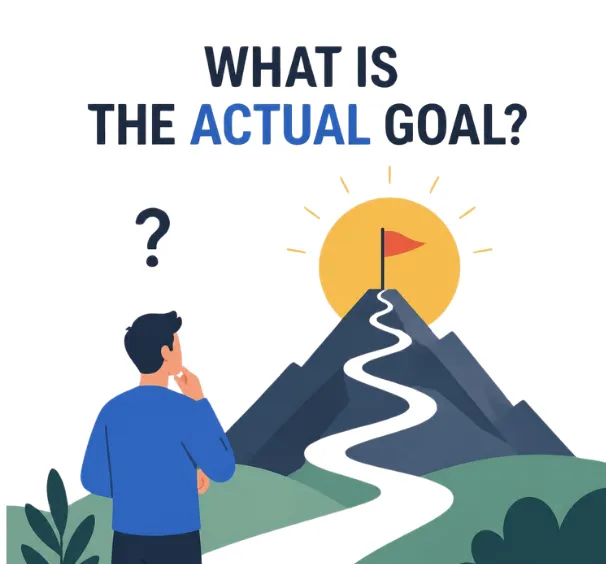
Try going underneath the goal. Maybe you don’t care about exercising because you love working out. Perhaps you care about having more energy during the day. Maybe you don’t enjoy studying, but you want the opportunities that finishing your education could create. Maybe you don’t particularly enjoy working on your business every day, but you want the independence that growing it could eventually give you.
The goal is what you’re doing. The reason underneath it is what can make the effort feel worthwhile. When you understand that deeper reason, an ordinary task can become connected to something much bigger than the task itself
1. Ask yourself why you actually want the goal.
Don’t stop with the first answer. If you want to become more productive, ask why that matters. Perhaps you’re tired of constantly feeling behind. If you want to exercise, perhaps you want more energy or strength. The deeper answer is often more meaningful than the original goal.
2. Picture the everyday life you’re trying to create.
Instead of imagining only the final achievement, think about what could change in your ordinary life. Perhaps you’ll have more freedom, less financial stress, more confidence in a skill, or more energy for the people and activities you care about. Sometimes the everyday benefits are more motivating than the distant finish line.
3. Make sure the goal belongs to you.
It’s easy to chase goals because social media, family, friends, or society have made them look desirable. But if you don’t genuinely care about the destination, constantly forcing yourself toward it can become exhausting. A goal doesn’t have to impress anyone else to be worth pursuing.
Stop Depending on Willpower for Everything
There’s another mistake we make when trying to become more motivated: we expect ourselves to resist every distraction through sheer willpower. Imagine your phone is sitting beside you while you’re trying to work, notifications keep appearing, your favorite websites are one click away, and the television is right in front of you. Then you tell yourself you’re going to concentrate perfectly for the next three hours.

That’s a lot to ask.
Sometimes self motivation becomes easier when your environment supports the behavior you’re trying to create. If you want to read before bed, keep your book somewhere visible. If you want to journal in the morning, leave the journal where you’ll notice it. If your phone constantly interrupts your concentration, move it away from your workspace instead of expecting yourself to heroically ignore it for hours.
You don’t always need stronger willpower. Sometimes you simply need to make the behavior you want slightly easier and the distraction slightly less convenient.
Build Self Motivation by Keeping Small Promises to Yourself
There’s a quieter part of self motivation that doesn’t get nearly as much attention: learning to trust yourself. Imagine repeatedly telling yourself that tomorrow you’ll wake up at 6 a.m., exercise for an hour, eat perfectly, work for eight hours, read thirty pages, and completely transform your routine. You might manage it for three days, but eventually real life gets in the way.

You sleep late. You miss the workout. You don’t finish everything on your list. Suddenly the entire plan feels ruined, and you start thinking that you simply aren’t disciplined enough.
But perhaps the problem wasn’t you. Perhaps the promises were too large.
Try making smaller commitments that you can realistically keep. If you tell yourself you’ll work for twenty minutes and actually do it, you’ve kept your word. If you decide you’ll journal three times this week and follow through, you’ve created evidence that you can rely on yourself.
Over time, those small moments of follow-through can become a stronger foundation for motivation than constantly making ambitious promises and feeling disappointed when you can’t maintain them.
Don’t Confuse Rest With a Lack of Motivation
Before you decide that you need to push yourself harder, it’s worth asking whether you’re actually tired. There are days when you’re simply not in the mood to work, and then there are days when your energy has been drained by poor sleep, stress, responsibilities, or weeks of pushing yourself without enough recovery.
Those situations can look surprisingly similar from the outside.
If you need rest, another productivity strategy may not be the answer. Taking an evening off, getting some sleep, eating properly, stepping outside, or simply having some quiet time can be a sensible part of maintaining your energy. Rest isn’t automatically procrastination.

The important thing is learning to notice the difference between restorative rest and avoidance. If you’re taking a break because you genuinely need one, that’s different from spending hours avoiding something while becoming increasingly anxious about the fact that you’re avoiding it.
Your Low-Motivation Version Matters Too
Think about your ideal routine for a moment. Maybe you wake up early, exercise, eat a healthy breakfast, work without distractions, journal, read, and still have enough energy left for a peaceful evening. It sounds wonderful, and there’s nothing wrong with having an ideal version of your day.
The problem comes when that ideal routine becomes the only version you’re willing to accept.

Now imagine an ordinary Tuesday. You slept badly, your plans changed, someone needed your help, and you’re already behind by lunchtime. What happens to your routine then? If your answer is “I abandon everything,” it may be time to create a smaller version that can survive ordinary life.
1. Create a normal version and a minimum version.
Your normal goal might be a one-hour workout, while your minimum version could be a ten-minute walk. Your usual journaling routine might take twenty minutes, while your minimum version could be writing three sentences. The minimum version isn’t meant to replace your bigger goal. It’s there for the days when your usual effort isn’t realistic.
2. Decide what “good enough” means before you need it.
It’s much easier to accept a smaller effort when you’ve already decided that it counts. Otherwise, you can fall into all-or-nothing thinking and decide that if you can’t complete the full routine, there’s no point doing anything.
3. Use the minimum version to stay connected to the habit.
The purpose isn’t to squeeze productivity out of every difficult day. It’s to prevent one difficult day from becoming a completely abandoned goal. Keeping even a small connection with something can make it easier to return to the full routine later.
What to Do When You Have Almost No Motivation
There are days when you’re not mildly unmotivated. You’re simply not feeling it at all. Your to-do list looks irritating, your goals feel distant, and even simple tasks seem to require an unreasonable amount of effort.
Those are usually not the days to give yourself a three-hour productivity challenge.
Start with the basics. Eat something if you haven’t. Drink some water. Get dressed. Open the curtains. Step away from your phone for a little while. Then look at your responsibilities and decide what genuinely needs your attention today. You may only accomplish one important thing, and that can still be enough for that particular day.
The goal of a low-motivation day doesn’t have to be becoming your most productive self. Sometimes it’s simply preventing one difficult day from becoming a difficult week.
If a lack of motivation becomes persistent, is accompanied by a broader loss of interest or pleasure, or significantly interferes with everyday life, it may be worth looking beyond ordinary procrastination and discussing it with a qualified professional.
Stop Making Everything All or Nothing
There’s a particular kind of thinking that can quietly destroy motivation: “If I can’t do it properly, there’s no point.”
You planned to exercise for an hour, but you only have twenty minutes, so you skip it. You planned to write 1,000 words, but you’re tired, so you write nothing. You wanted to journal every night, missed three nights, and decide you’ve ruined the habit.
Real life doesn’t work that neatly.
Some days you’ll have the energy for the full workout. Other days you’ll take a short walk. Some days you’ll write 1,000 words, while on another day you’ll manage one paragraph. That doesn’t mean you have to lower every standard you have. It means you need a version of your goals that can survive ordinary life.
Consistency isn’t about performing at your highest level every single day. It’s about continuing to participate when your level of energy, time, or focus changes.
How to Start Again After Losing Motivation
This is where many people make things harder than they need to be. They miss a few days and decide they’ve failed. Then they wait for Monday to restart. Monday becomes a busy day, so they decide they’ll start next month. Eventually the original goal becomes something they remember with a mixture of guilt and frustration.
But you don’t need a perfect restart date.
You can start again on an ordinary Wednesday afternoon. You also don’t need to make up for all the days you missed. If you stopped exercising for two weeks, you don’t need to punish yourself with an enormous workout. If you stopped journaling, you don’t need to fill twenty pages to compensate.
You simply need to return to the next manageable step.
1. Don’t wait for Monday.
Starting again in the middle of an ordinary day can be more useful than waiting for a perfect beginning. Real life rarely gives you a completely clean slate, so learning to restart in the middle of an imperfect week is an important part of building consistency.
2. Start smaller than you did before.
If your previous routine became difficult to maintain, don’t automatically recreate it. Look at what made you stop and adjust the routine accordingly. A smaller routine that you actually repeat is more useful than an ambitious routine that continually collapses.
3. Don’t make guilt part of the restart.
You can’t change the days that have already passed. What you can change is what happens next. Treat the missed days as information rather than evidence that you’re incapable of consistency.
You Don’t Need a New Personality
If you’ve struggled with motivation for a long time, you may have started believing that you need to become a completely different person. You imagine that one day you’ll suddenly become disciplined, organized, energetic, focused, and incredibly consistent.
But you don’t need a new personality to make progress.
You need goals, routines, and expectations that fit the person you actually are. Maybe you work better in shorter sessions. Maybe you need your phone out of sight. Maybe you need a meaningful reason behind a goal before you can stick with it. Maybe you need more flexibility than the routine you originally created allowed.
These aren’t necessarily weaknesses. They’re things you can learn about yourself.
Every failed attempt can give you information about what doesn’t work. Instead of thinking, “I failed again,” try asking, “What did this attempt teach me?” That question turns a disappointing attempt into something useful because now you have information you can use to make the next attempt different.
How to Build Self Motivation That Lasts
If you want to become more self-motivated, don’t make “feeling motivated” the goal. Instead, build a life in which taking action becomes easier. Choose goals that genuinely matter to you, break intimidating tasks into smaller beginnings, create an environment that supports the behaviors you want, and keep promises to yourself that are realistic.
It also helps to expect your motivation to change. You’ll have energetic days and tired days. You’ll have weeks when everything seems to work and weeks when your routine falls apart. That doesn’t automatically mean your system has failed. It means you’re living a real life rather than following a perfectly controlled schedule.
The goal isn’t to eliminate every obstacle. It’s to become better at navigating them without turning every setback into a reason to quit.
The Real Secret to Self Motivation
Maybe self motivation isn’t really about finding a way to make yourself want to do everything. Maybe it’s about becoming comfortable with doing some things because they matter, even when they’re not particularly exciting.
You won’t always feel like studying. You won’t always feel like exercising. You won’t always feel like working on your goals, cleaning the house, answering the email, or doing the boring task you’ve been postponing. Waiting until every task feels enjoyable would leave a lot of important things unfinished.
Instead, you can make the beginning smaller, remind yourself why the task matters, remove distractions, and give yourself a realistic version of the goal for difficult days. You can also accept that sometimes you will lose momentum and then learn how to return.
You don’t have to conquer the entire staircase in one day. You only need to figure out what the next manageable step looks like and give yourself a chance to take it.
Frequently Asked Questions About Self Motivation
You won’t feel motivated every day, and you don’t need to. Some days you’ll wake up ready to get things done, while other days getting started will feel like the hardest part of your day. That’s why self motivation isn’t about constantly forcing yourself to be productive. It’s about learning how to make the next step easier, reconnecting with the reasons behind your goals, and giving yourself enough flexibility to keep going when life doesn’t cooperate. Make the first step smaller. Give yourself a realistic version of the goal. Keep promises to yourself that you can actually keep. And when you fall off track, come back without turning the restart into another reason to criticize yourself. You don’t need a huge burst of motivation to change your direction. Sometimes you simply need to make the next step small enough that you’re willing to take it.